Octopus Stifado: the story on the plate
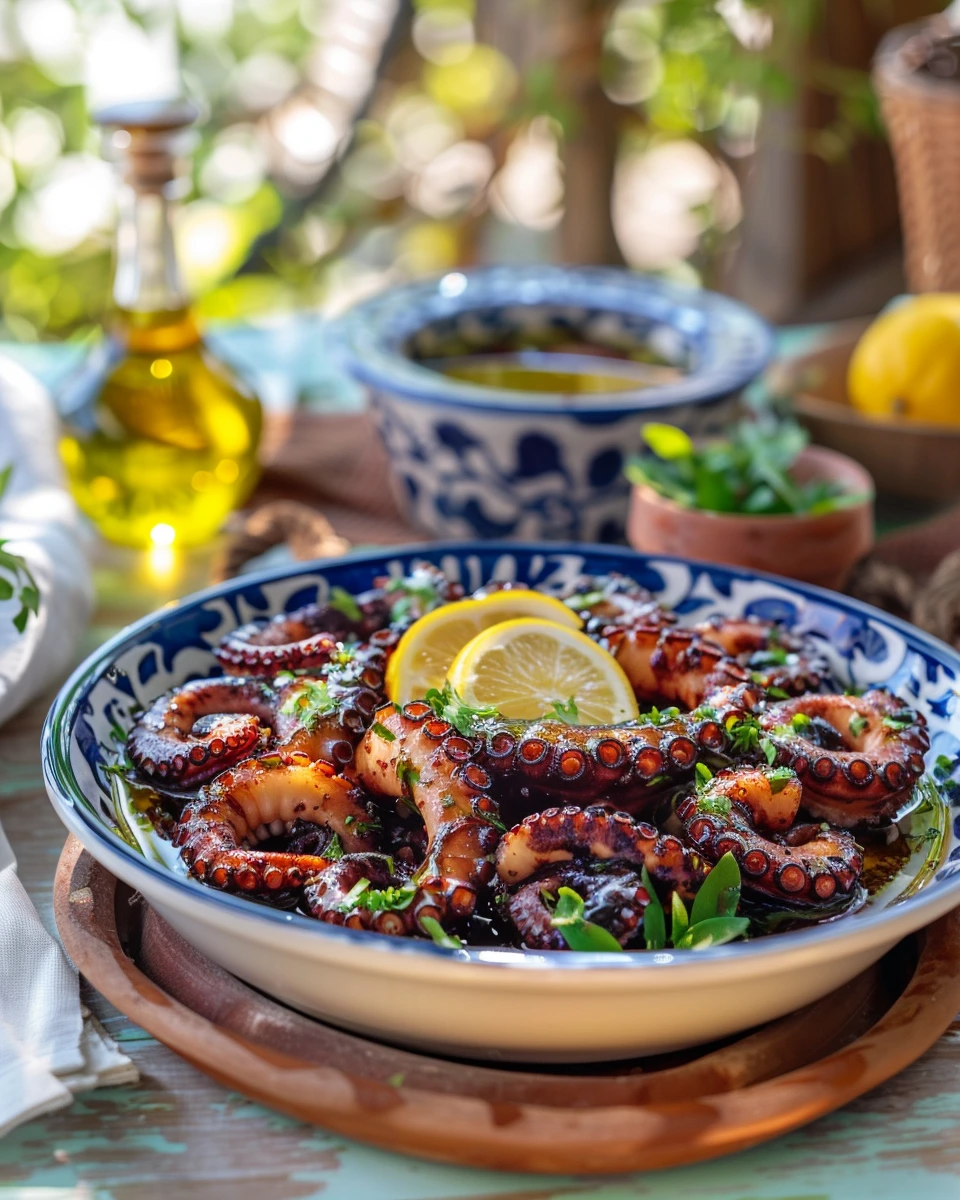
Octopus has long been preserved, grilled and stewed in Greek island and coastal communities. Preparing it as stifado applies the classic onion-rich braising method to seafood, often with red wine, vinegar, tomato and bay. The dish is prized because slow cooking turns firm octopus tender while its juices deepen the sauce. Small onions remain whole and sweet, balancing the sea flavour and wine acidity. Octopus stifado appears in island tavernas and during fasting periods when seafood without a backbone may be permitted. It is a good example of Greek cooks treating seafood with the same patience used for meat stews.
Historical background
Octopus has long been preserved, grilled and stewed in Greek island and coastal communities. Preparing it as stifado applies the classic onion-rich braising method to seafood, often with red wine, vinegar, tomato and bay.
Why it is famous
The dish is prized because slow cooking turns firm octopus tender while its juices deepen the sauce. Small onions remain whole and sweet, balancing the sea flavour and wine acidity.
Cultural significance
Octopus stifado appears in island tavernas and during fasting periods when seafood without a backbone may be permitted. It is a good example of Greek cooks treating seafood with the same patience used for meat stews.