Taiwanese Starter

Taiwanese Scallion Pancakes

The spiralled dough produces crisp layers without yeast.

25 minsPrep time
20 minsCook time
Serves 4; includes 40 min passive timeServings
EasyDifficulty
Taiwanese Scallion Pancakes
About this dish

Taiwanese Scallion Pancakes: the story on the plate

Cong you bing belongs to a broad Chinese pancake tradition and has an established place in Taiwanese breakfast and street-food cooking. Its layers come from rolling and coiling dough with oil, rather than from a raising agent. The contrast between flaky edges and a slightly chewy centre is the defining pleasure; this is a plain scallion version, without the egg often added at breakfast stalls. Served as a snack or breakfast; wedges work well as a shared starter.

Historical background

Cong you bing belongs to a broad Chinese pancake tradition and has an established place in Taiwanese breakfast and street-food cooking. Its layers come from rolling and coiling dough with oil, rather than from a raising agent. The contrast between flaky edges and a slightly chewy centre is the defining pleasure; this is a plain scallion version, without the egg often added at breakfast stalls.

Why it is famous

The spiralled dough produces crisp layers without yeast. The defining contrast is flaky edges, chewy layers.

Cultural significance

Served as a snack or breakfast; wedges work well as a shared starter. Treat this as one regional or household version; accompaniments and seasoning vary between cooks.
Nutrition

Estimated nutrition per serving

These figures are estimates per serving. Actual nutrition can vary with the brands and exact amounts you use, how much oil, dressing or sauce is absorbed, any substitutions or added extras, and the portion size served.

A practical guide for comparing recipes and planning meals.

383Calories
8gProtein
58.8gCarbs
12.3gFat
Ingredients

What you need

  • 300 plain flour
  • 180 water, hot, not boiling
  • 100 spring onion, finely sliced
  • 35 Vegetable Oil
  • 6 Salt
  • 15 sesame oil
Method

Step-by-step method

Follow the recipe in order, tasting and adjusting seasoning where needed.

  1. 1. Measure the hot water before mixing and let the dough cool enough to handle safely. Slice spring onions finely.
  2. 2. Mix flour and salt, pour in hot water and stir; cool enough to knead into a smooth dough.
  3. 3. Cover and rest 30 minutes, then divide into four pieces.
  4. 4. Roll each thinly, brush with sesame oil and scatter with spring onion. Roll into a log, coil and rest 10 minutes.
  5. 5. Flatten each coil gently into an 18 cm pancake, keeping layers intact.
  6. 6. Cook two pancakes at a time in a wide frying pan, using the measured vegetable oil across the batches. Fry over medium heat for 3–4 minutes per side until golden and cooked through; allow 20 minutes for two batches. With a smaller pan, cook singly and allow another 10–15 minutes.
Cook smarter

Tips, storage and serving advice

Shopping tips

Measure the hot water before mixing and let the dough cool enough to handle safely. Slice spring onions finely.

Ingredient quality

Measure the hot water before mixing and let the dough cool enough to handle safely. Slice spring onions finely. Rest the dough after coiling so it rolls without springing back; press gently to preserve the spiral layers.

Common mistakes

An excessively hot pan browns the outside before the centre cooks. Thick raw bands mean the pancake needs gentler, longer cooking.

Chef’s tips

Rest the dough after coiling so it rolls without springing back; press gently to preserve the spiral layers.

How to know it is cooked

Fry in vegetable oil over medium heat for 3–4 minutes per side until golden and cooked through; cut into wedges.

Plating advice

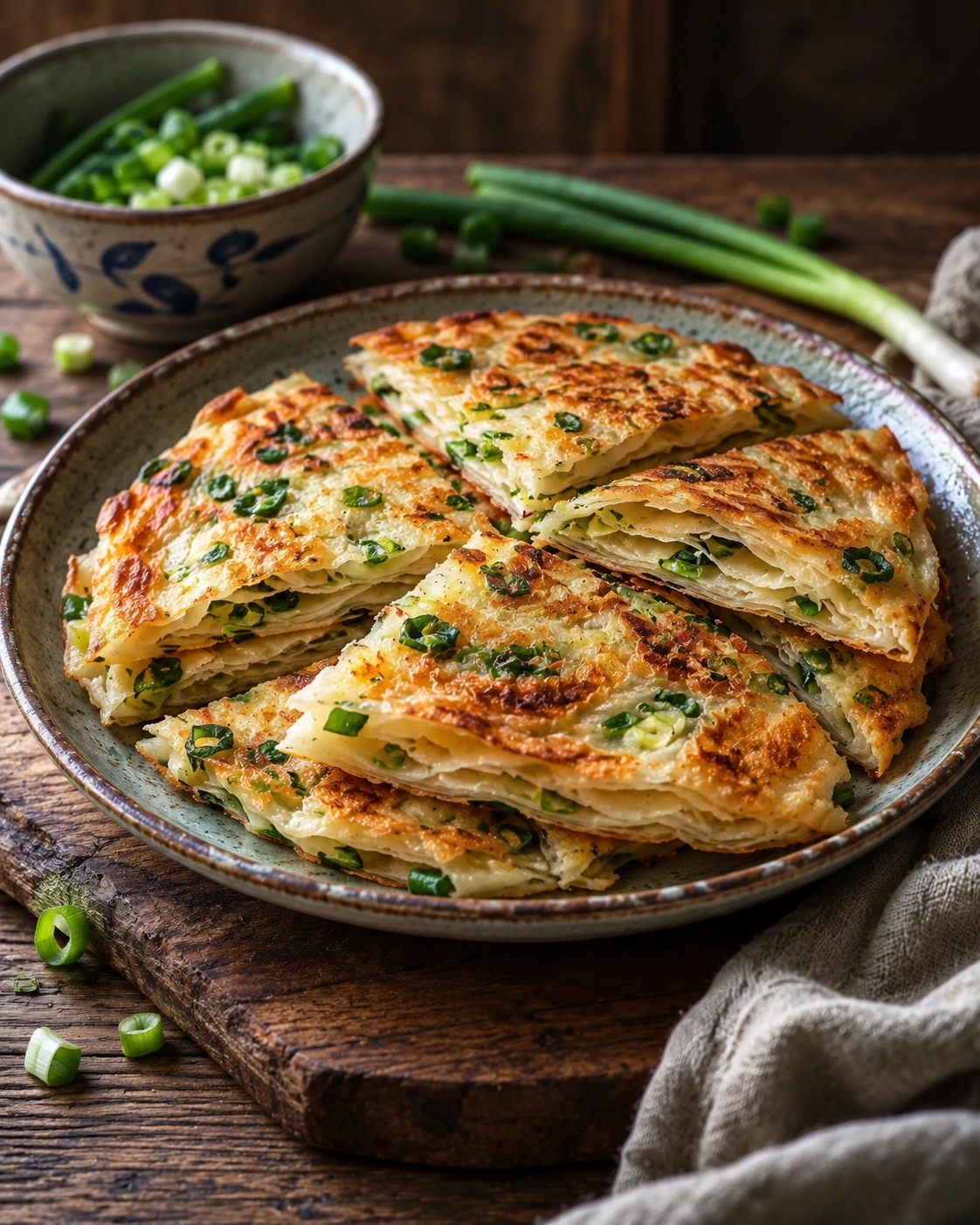
Golden pan-fried Taiwanese scallion pancakes cut into wedges, visible thin flaky layers and green scallion flecks, no eggs and no dipping sauce.

Make ahead

Preparation checkpoint: Measure the hot water before mixing and let the dough cool enough to handle safely. Slice spring onions finely. Prepare and measure components ahead, then follow the cooking, chilling and assembly order in the method. Keep raw animal foods chilled and separate from ready-to-eat ingredients.

Storage and reheating

Refrigerate perishable leftovers promptly in shallow covered containers at 5°C or below and use within 48 hours or the shortest ingredient use-by date. Reheat once in a moderate oven or dry pan until hot throughout to recover some surface crispness; quality is best freshly cooked.