Roti Jala: the story on the plate
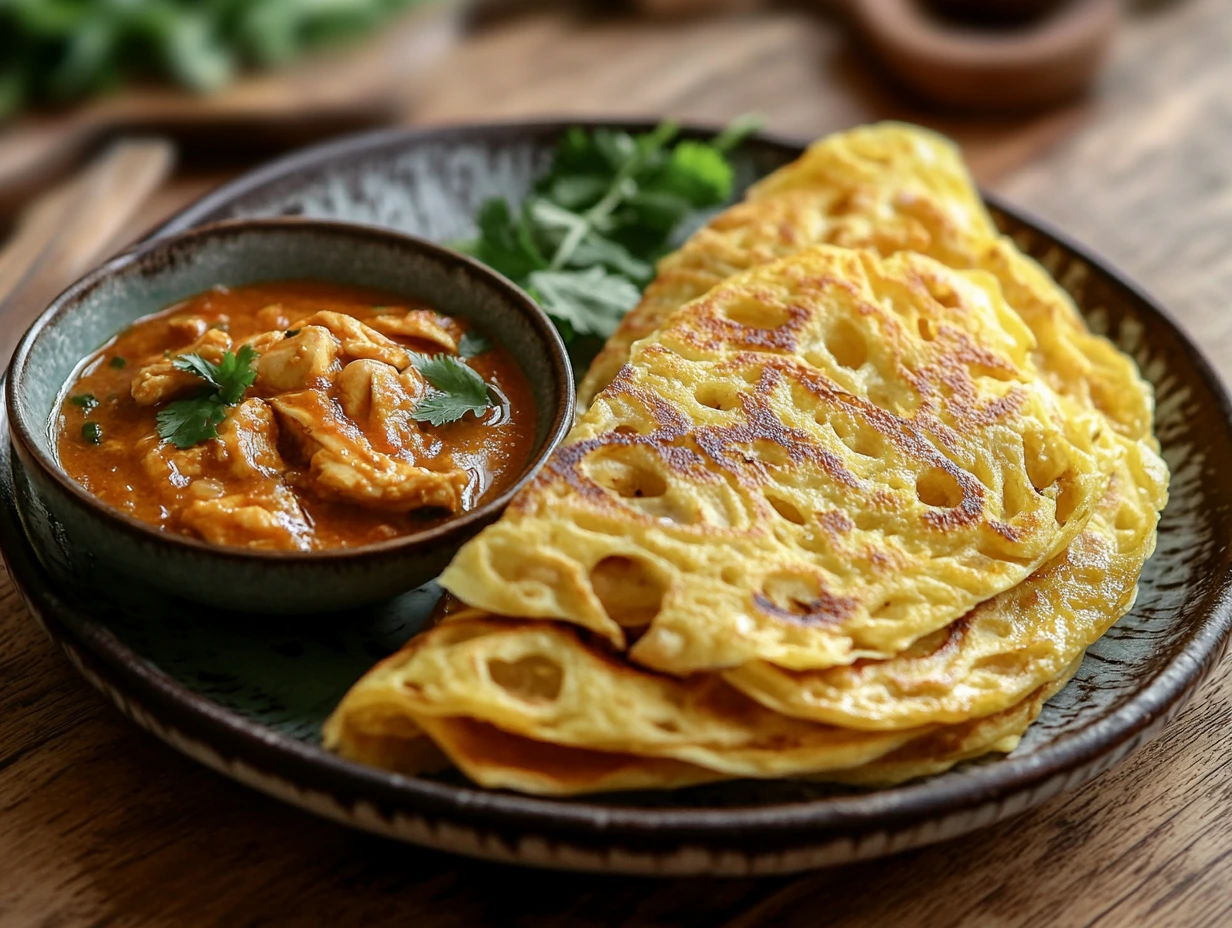
Roti Jala is rooted in Malay festive cooking, influenced by South Asian breads but shaped into a distinctive lacy form. Its present form reflects the ingredients, trade routes and household techniques that made the dish useful and memorable in that setting. It is recognised for delicate turmeric-coloured net crepes designed to soak up curry. The best versions keep those elements distinct and balanced, so the dish tastes deliberate rather than heavy or muddled. Today it is closely associated with hawker centres, kopitiams, family tables and festive open houses. That context explains how it is portioned, what accompanies it and why it remains part of Malaysian food culture.
Historical background
Roti Jala is rooted in Malay festive cooking, influenced by South Asian breads but shaped into a distinctive lacy form. Its present form reflects the ingredients, trade routes and household techniques that made the dish useful and memorable in that setting.
Why it is famous
It is recognised for delicate turmeric-coloured net crepes designed to soak up curry. The best versions keep those elements distinct and balanced, so the dish tastes deliberate rather than heavy or muddled.
Cultural significance
Today it is closely associated with hawker centres, kopitiams, family tables and festive open houses. That context explains how it is portioned, what accompanies it and why it remains part of Malaysian food culture.