Koshari: the story on the plate
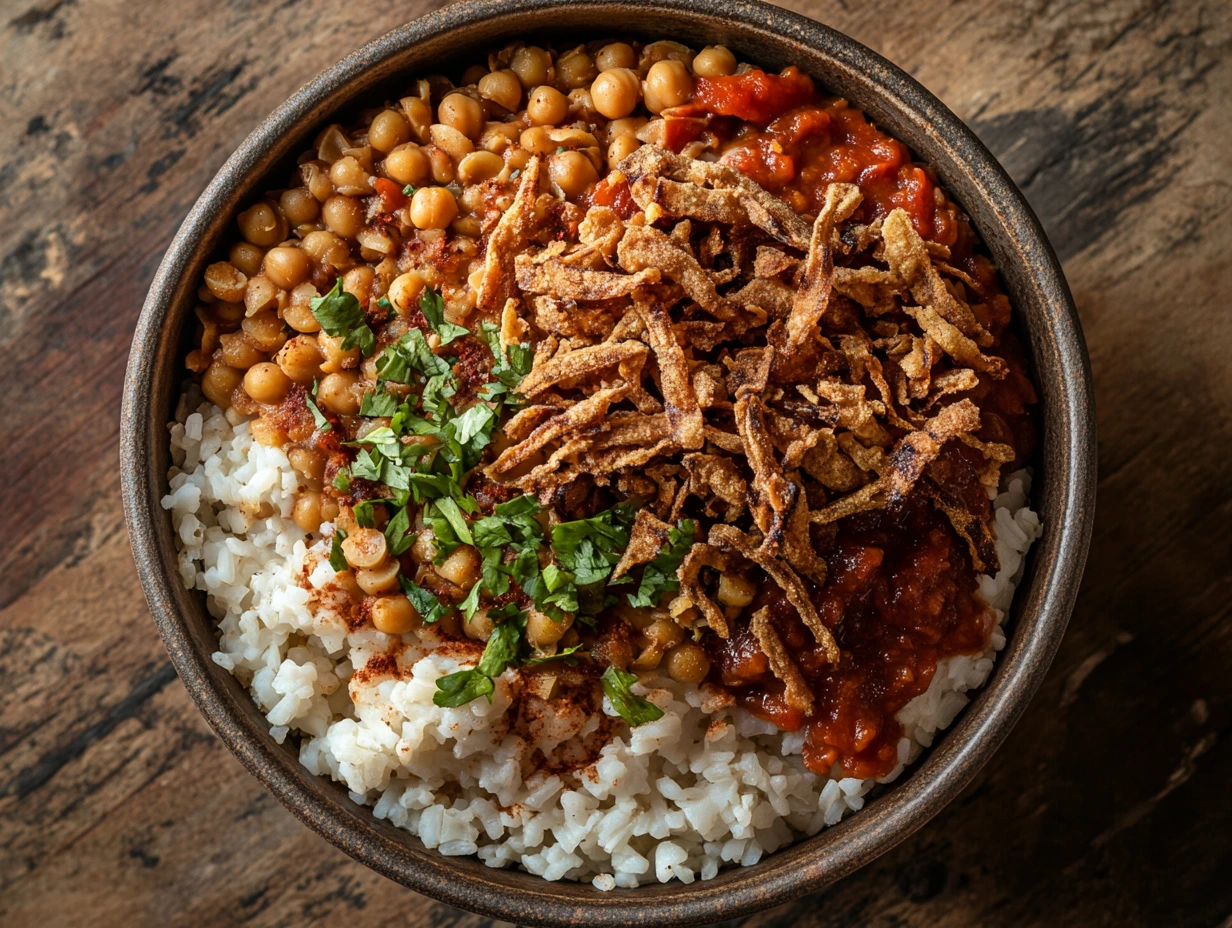
Koshari took shape in nineteenth- and early twentieth-century Egypt as rice, lentils and pasta from different culinary currents came together in an inexpensive urban meal. It became closely associated with Cairo's workers and specialist koshari shops. The dish is famous for abundance and contrast: soft lentils, separate rice, pasta and chickpeas meet spicy tomato sauce, sharp daqqa and crackling onions. Each diner can adjust heat and acidity. Koshari is one of Egypt's most democratic foods, eaten by students, office workers and families. Dedicated restaurants serve little else, and the dish offers a filling meat-free meal at modest cost.
Historical background
Koshari took shape in nineteenth- and early twentieth-century Egypt as rice, lentils and pasta from different culinary currents came together in an inexpensive urban meal. It became closely associated with Cairo's workers and specialist koshari shops.
Why it is famous
The dish is famous for abundance and contrast: soft lentils, separate rice, pasta and chickpeas meet spicy tomato sauce, sharp daqqa and crackling onions. Each diner can adjust heat and acidity.
Cultural significance
Koshari is one of Egypt's most democratic foods, eaten by students, office workers and families. Dedicated restaurants serve little else, and the dish offers a filling meat-free meal at modest cost.