Egyptian Main

Roz Bel Khalta

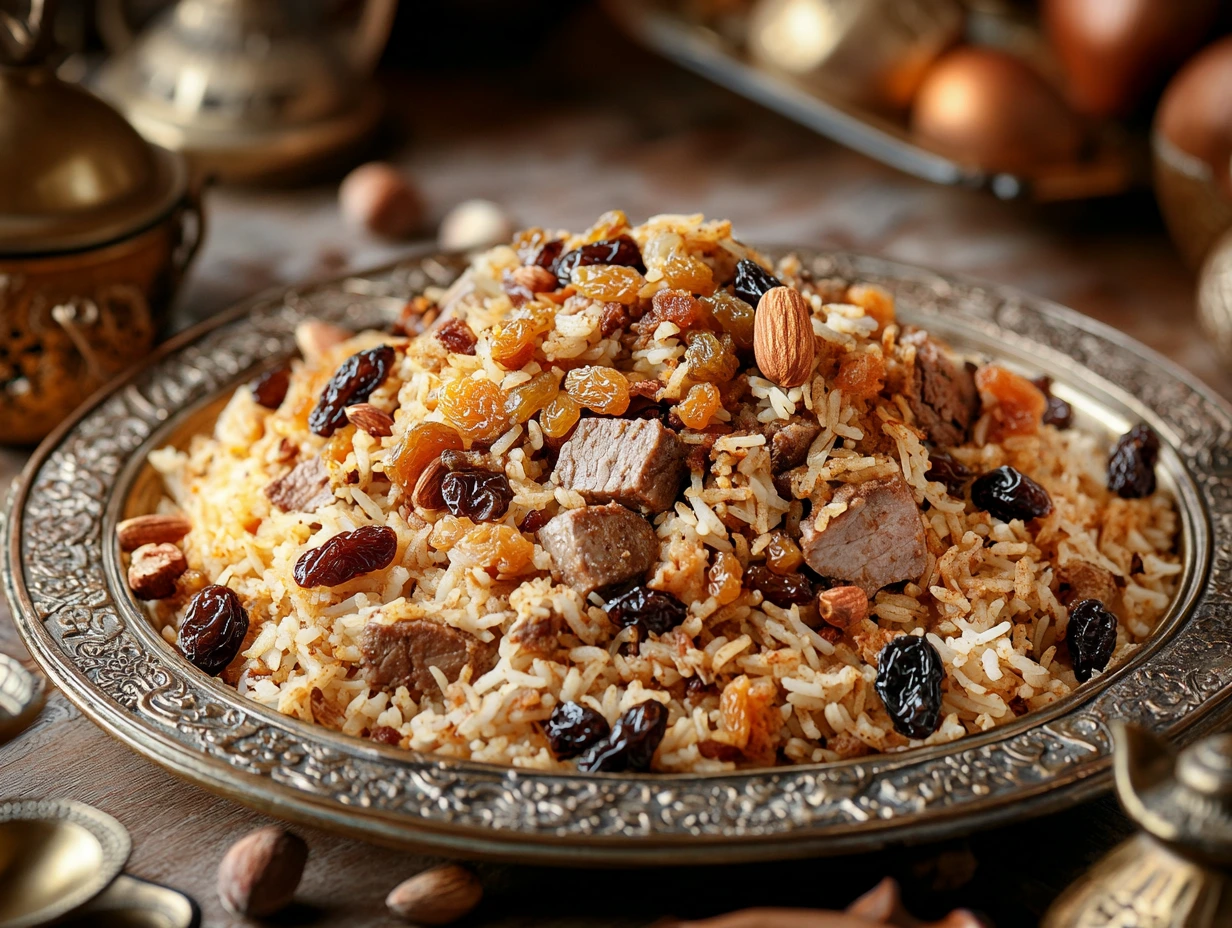
Fragrant celebration rice with toasted nuts, raisins and savoury meat.

25 minsPrep time
28 minsCook time
Serves 4Servings
MediumDifficulty
Roz Bel Khalta
About this dish

Roz Bel Khalta: the story on the plate

Elaborately garnished rice dishes developed for Egyptian feasts where a plain staple could be transformed through nuts, dried fruit and meat. Roz bel khalta literally presents rice as a mixture of contrasting additions. The dish is known for sweet-savoury balance and varied texture: fluffy rice, crisp nuts, chewy raisins and browned meat or liver. Cinnamon and allspice provide fragrance without making it dessert-like. It accompanies roast poultry, lamb and major holiday meals and is often prepared when a more decorative rice is required. The nut garnish signals generosity.

Historical background

Elaborately garnished rice dishes developed for Egyptian feasts where a plain staple could be transformed through nuts, dried fruit and meat. Roz bel khalta literally presents rice as a mixture of contrasting additions.

Why it is famous

The dish is known for sweet-savoury balance and varied texture: fluffy rice, crisp nuts, chewy raisins and browned meat or liver. Cinnamon and allspice provide fragrance without making it dessert-like.

Cultural significance

It accompanies roast poultry, lamb and major holiday meals and is often prepared when a more decorative rice is required. The nut garnish signals generosity.

Nutrition

Estimated nutrition per serving

These figures are estimates per serving. Actual nutrition can vary with the brands and exact amounts you use, how much oil, dressing or sauce is absorbed, any substitutions or added extras, and the portion size served.

A practical guide for comparing recipes and planning meals.

510Calories
18gProtein
72gCarbs
17gFat
Ingredients

What you need

  • 60 ghee, divided
  • 180 chicken liver or giblets, trimmed and diced, optional
  • 320 Egyptian short-grain rice, rinsed
  • 520 chicken stock, hot
  • 3 ground cinnamon
  • 3 ground allspice
  • 9 fine sea salt
  • 45 almonds, blanched
  • 35 pine nuts
  • 55 raisins
Method

Step-by-step method

Follow the recipe in order, tasting and adjusting seasoning where needed.

  1. Toast nuts and raisins: Melt 20 g ghee and fry almonds and pine nuts until golden, then lift out. Add raisins for 30 seconds until plump, then remove.
  2. Cook the giblets: In the same pan, cook diced liver or giblets over medium-high heat for 3 to 4 minutes until browned. Season lightly and remove.
  3. Coat the rice: Add remaining ghee, stir in rinsed rice, cinnamon, allspice and salt, and cook for 2 minutes so each grain is glossy.
  4. Steam gently: Add hot stock, cover and cook on low for 14 minutes. Rest covered for 10 minutes without lifting the lid.
  5. Fold in the khalta: Gently fold in the giblets, nuts and raisins, keeping some for the top. Do not beat the rice or it will become heavy.
  6. Serve as a centrepiece: Pile into a warm dish and scatter the reserved nuts and raisins over the top. Serve with roast chicken, duck or lamb.
Cook smarter

Tips, storage and serving advice

Shopping tips

Use split fava beans for taameya, good tahini for dips, fresh herbs for mahshi and besara, short-grain rice for Egyptian rice dishes, and coarse semolina for basbousa.

Ingredient quality

Fresh herbs should smell vivid, cumin should be aromatic, onions should be firm and dry, and fish or meat should look clean and fresh. Do not hide tired ingredients under spice.

Common mistakes

For Roz Bel Khalta, the main mistakes are losing control of the balance between Egyptian short-grain rice, chicken stock, chicken liver or giblets, almonds; rushing the "Toast nuts and raisins" stage before the flavour or texture has properly developed; and using heat or cooking time mechanically instead of watching the food itself. Use the recipe's visual cue as your guide: Texture, aroma and colour should match the dish: tender where simmered, crisp where fried, glossy where sauced and bright where finished with herbs or lemon. With Roz Bel Khalta, taste and observe as you cook rather than relying on the clock alone; the goal is a result that still tastes recognisably Egyptian and preserves the texture that makes this recipe distinctive.

Chef’s tips

For the best Roz Bel Khalta, organise Egyptian short-grain rice, chicken stock, chicken liver or giblets, almonds before you start so the cooking itself can stay controlled. Give particular attention to the "Toast nuts and raisins" stage: this is where the recipe begins to establish its final flavour and texture. A useful technique note from the method is: Taste with the normal accompaniment, such as bread, rice, salad or sauce, because Egyptian dishes are designed as complete plates. Trust the visual cue — Texture, aroma and colour should match the dish: tender where simmered, crisp where fried, glossy where sauced and bright where finished with herbs or lemon. — more than an exact minute count. At the "Serve as a centrepiece" stage, make the final seasoning adjustment and serve without unnecessary delay. That final check is what makes Roz Bel Khalta taste deliberate rather than simply cooked.

How to know it is cooked

It is cooked when the main ingredient is tender, the sauce or rice has the intended texture, and the dish tastes balanced with its normal accompaniment.

Plating advice

Plate Roz Bel Khalta so the dish reads clearly at first glance. Build the plate around the principal serving rather than scattering everything evenly; keep Egyptian short-grain rice, chicken stock, chicken liver or giblets visually connected so the diner can understand the dish before taking the first bite. The presentation should protect the intended texture — clear contrast between soft interiors, crisp toppings, fluffy rice, creamy sauces, smoky dips or syrup-soaked crumb depending on the dish — so avoid covering crisp elements with sauce too early or compressing delicate components. For the finish, draw selectively from the existing garnish guidance: Parsley, coriander, lemon wedges, crisp onions, toasted nuts, sesame seeds, cinnamon, pistachios, olive oil or tahini depending on the recipe. Use one or two elements with purpose rather than applying every option at once. For Roz Bel Khalta, the final plate should feel consistent with its Egyptian identity: confident, appetising and easy to eat, with no decoration that competes with the food itself.

Make ahead

Prep herbs, sauces, soaked beans, stock and chopped vegetables ahead. Fry taameya, grill kofta, finish molokhia tasha and soak syrup cakes close to serving for best texture.

Storage and reheating

Cool leftovers quickly and refrigerate in sealed containers for up to 2 days for meat and fish dishes, or up to 3 days for beans, rice puddings and syrup cakes. Reheat stews, rice and stuffed vegetables gently with a splash of water or stock until piping hot. Re-crisp fried items in an oven or air fryer rather than the microwave.

Wine pairing

What to drink with Roz Bel Khalta

These are wine-style pairings, so you can choose any bottle in that style rather than needing one exact producer. Look for the grape, region or style name on the label.

Pairings are chosen around the dish’s flavour, texture, richness, acidity and cooking style, not just the country it comes from.

Chardonnay wine pairing
#1 Excellent match White

Chardonnay

Why it works:

Chardonnay is a well-balanced match for Roz Bel Khalta, with enough freshness to lift the dish and enough flavour intensity to complement its main ingredients without overpowering them.

Creamy or lightly oaked white wine with citrus, stone fruit and enough body for seafood, poultry and rich sauces.

GrapeChardonnay
RegionAustralia, New Zealand, France, Italy, Spain, Germany
Wine flavourCreamy or lightly oaked white wine with citrus, stone fruit and enough bod…
Serve at9-11°C
  • Flavour bridge: the wine's fruit, savoury notes and freshness create a natural bridge to the dish
  • Acidity: Acidity keeps the pairing lively and food-focused
  • Body: Body is matched to the overall weight of the dish
  • Tannin: Tannin level is kept appropriate to the dish's protein and texture
  • Sweetness: Dry unless the dish benefits from a touch of residual sweetness
  • Best for: Dinner, entertaining or recipe pairing
View wine guide
Pinot Noir / Burgundy wine pairing
#2 Great match Red

Pinot Noir / Burgundy

Why it works:

Pinot Noir / Burgundy is a strong secondary match for Roz Bel Khalta, with enough freshness to lift the dish and enough flavour intensity to complement its main ingredients without overpowering them.

Elegant red with red cherry, earth, spice and fine tannins. Great with duck, mushroom, poultry, pork and lighter beef dishes.

GrapePinot Noir, Spätburgunder
RegionBurgundy, Oregon, Central Otago, Baden
Wine flavourred cherry, raspberry, earth, mushroom, spice
Serve at14-16°C
  • Flavour bridge: the wine's fruit, savoury notes and freshness create a natural bridge to the dish
  • Acidity: Acidity keeps the pairing lively and food-focused
  • Body: Body is matched to the overall weight of the dish
  • Tannin: Tannin level is kept appropriate to the dish's protein and texture
  • Sweetness: Dry unless the dish benefits from a touch of residual sweetness
  • Best for: Dinner, entertaining or recipe pairing
View wine guide
Dry Riesling wine pairing
#3 Interesting match White

Dry Riesling

Why it works:

For a more adventurous pairing, dry Riesling is a well-balanced match for Roz Bel Khalta, with enough freshness to lift the dish and enough flavour intensity to complement its main ingredients without overpowering them.

A precise, high-acid white with lime, green apple, blossom and mineral tension. It loves pork, fish, cabbage, spice and rich sauces.

GrapeRiesling
RegionMosel, Rheingau, Alsace, Clare Valley
Wine flavourlime, green apple, petrol, slate, blossom
Serve at8-10°C
  • Flavour bridge: the wine's fruit, savoury notes and freshness create a natural bridge to the dish
  • Acidity: Acidity keeps the pairing lively and food-focused
  • Body: Body is matched to the overall weight of the dish
  • Tannin: Tannin level is kept appropriate to the dish's protein and texture
  • Sweetness: Dry unless the dish benefits from a touch of residual sweetness
  • Best for: Dinner, entertaining or recipe pairing
View wine guide
Bottle suggestions

Specific wines to try

These are named bottles or regional wine examples already linked to this recipe. Each card opens the relevant wine-style guide because individual bottle pages are not currently published.