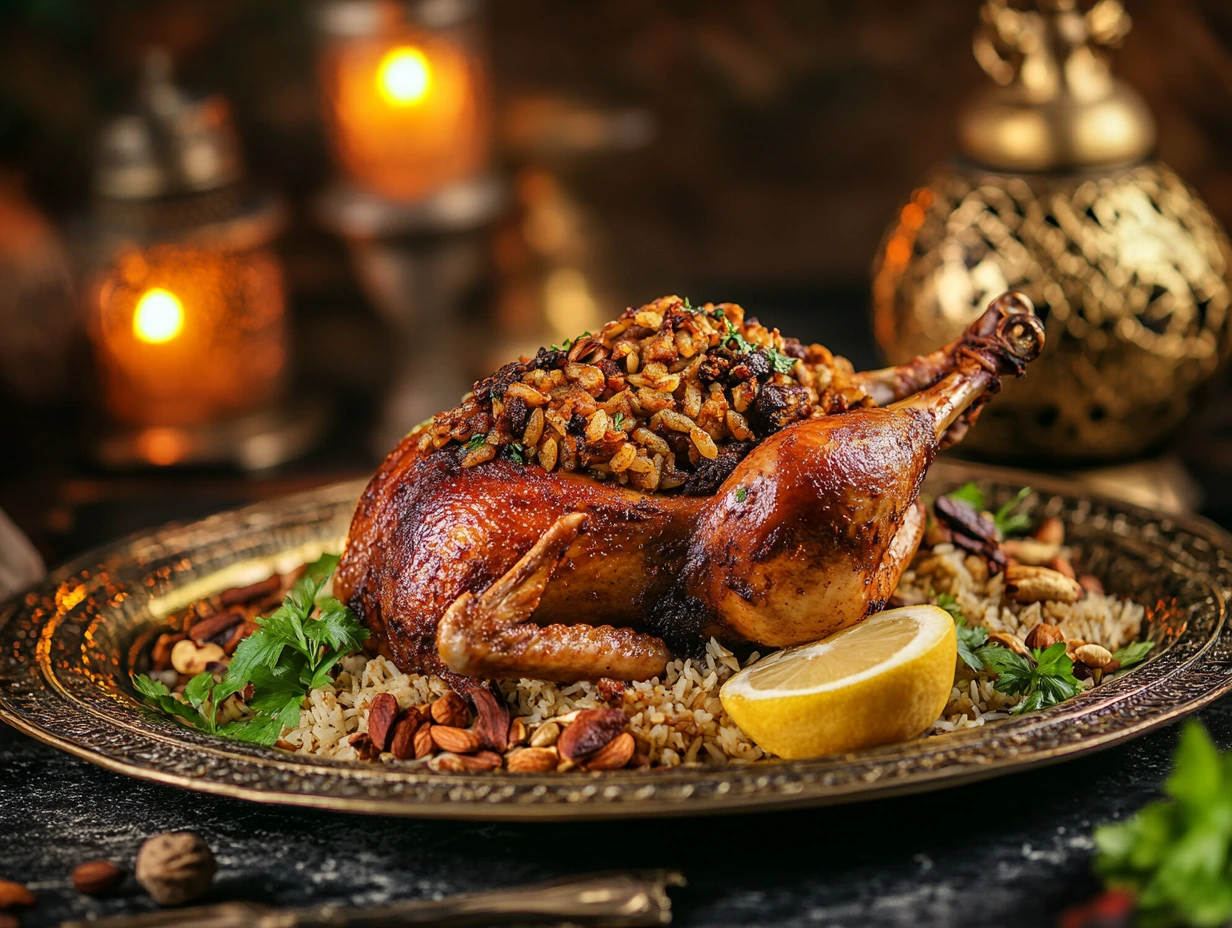
Hamam Mahshi: the story on the plate
Pigeon has been raised in Egyptian dovecotes for centuries and became a prestigious yet deeply traditional food. Stuffing the birds with rice or cracked green wheat turns a small bird into a complete, celebratory dish. It is prized for rich dark meat and grain that absorbs the pigeon juices from within. Careful stuffing is essential: too much filling expands and splits the bird, while proper roasting leaves crisp skin and moist meat. Hamam mahshi is served at weddings, feasts and specialist restaurants, particularly in rural areas and old-city dining rooms. Offering pigeon is a sign of generosity.
Historical background
Pigeon has been raised in Egyptian dovecotes for centuries and became a prestigious yet deeply traditional food. Stuffing the birds with rice or cracked green wheat turns a small bird into a complete, celebratory dish.
Why it is famous
It is prized for rich dark meat and grain that absorbs the pigeon juices from within. Careful stuffing is essential: too much filling expands and splits the bird, while proper roasting leaves crisp skin and moist meat.
Cultural significance
Hamam mahshi is served at weddings, feasts and specialist restaurants, particularly in rural areas and old-city dining rooms. Offering pigeon is a sign of generosity.