Fattah: the story on the plate
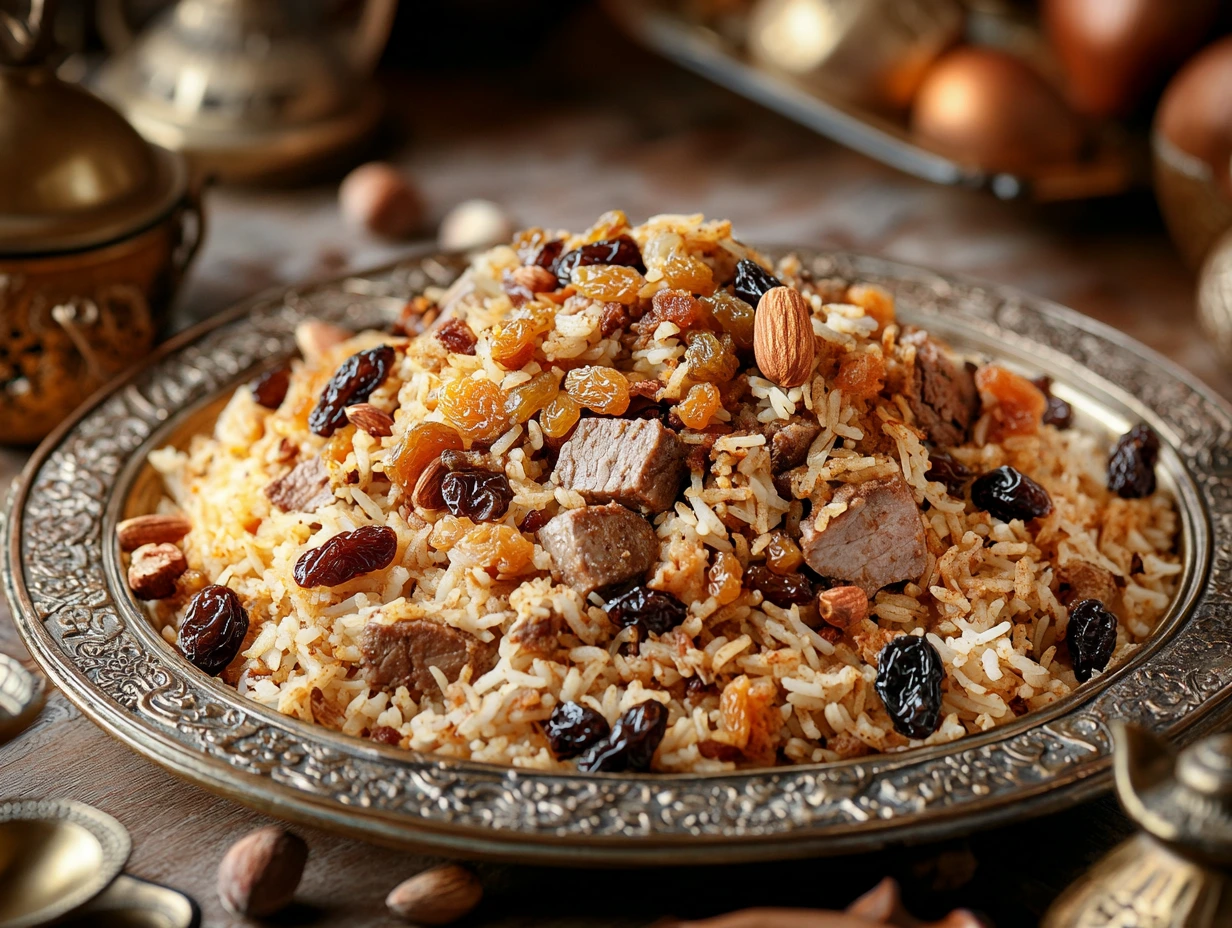
Fattah belongs to an ancient family of dishes built by breaking bread and soaking it with broth. In Egypt it developed into a festive composition of baladi bread, rice and meat, sharpened with garlic and vinegar. The pleasure comes from contrasting layers: some bread remains crisp, some absorbs broth, rice provides softness, and slow-cooked meat adds richness. The vinegar-garlic sauce prevents the plate becoming heavy. It is strongly associated with Eid al-Adha, when sacrificial meat is shared, and with major family celebrations. The dish signals abundance and communal eating.
Historical background
Fattah belongs to an ancient family of dishes built by breaking bread and soaking it with broth. In Egypt it developed into a festive composition of baladi bread, rice and meat, sharpened with garlic and vinegar.
Why it is famous
The pleasure comes from contrasting layers: some bread remains crisp, some absorbs broth, rice provides softness, and slow-cooked meat adds richness. The vinegar-garlic sauce prevents the plate becoming heavy.
Cultural significance
It is strongly associated with Eid al-Adha, when sacrificial meat is shared, and with major family celebrations. The dish signals abundance and communal eating.