Taiwanese Main

Taiwanese Beef Noodle Soup

Slow-braised beef and a deeply seasoned broth make it a signature Taiwanese bowl.

25 minsPrep time
2 hr 55 minsCook time
Serves 4Servings
MediumDifficulty
Taiwanese Beef Noodle Soup
About this dish

Taiwanese Beef Noodle Soup: the story on the plate

Taiwanese beef noodle soup developed through post-war migration and local adaptation, with clear-broth and red-braised styles now both widely recognised. This version takes the red-braised route: beef shin supplies connective tissue, doubanjiang adds fermented chilli depth and warm spices scent the broth. Tender beef and separately cooked noodles matter more than an aggressively reduced, salty soup. Broth styles range from clear to red-braised; this is a red-braised home version.

Historical background

Taiwanese beef noodle soup developed through post-war migration and local adaptation, with clear-broth and red-braised styles now both widely recognised. This version takes the red-braised route: beef shin supplies connective tissue, doubanjiang adds fermented chilli depth and warm spices scent the broth. Tender beef and separately cooked noodles matter more than an aggressively reduced, salty soup.

Why it is famous

Slow-braised beef and a deeply seasoned broth make it a signature Taiwanese bowl. The defining contrast is tender beef, springy noodles.

Cultural significance

Broth styles range from clear to red-braised; this is a red-braised home version. Treat this as one regional or household version; accompaniments and seasoning vary between cooks.
Nutrition

Estimated nutrition per serving

These figures are estimates per serving. Actual nutrition can vary with the brands and exact amounts you use, how much oil, dressing or sauce is absorbed, any substitutions or added extras, and the portion size served.

A practical guide for comparing recipes and planning meals.

756Calories
55.5gProtein
73.4gCarbs
25.1gFat
Ingredients

What you need

  • 800 beef shin, cubed
  • 300 wheat noodles, dry
  • 80 Onion
  • 25 ginger
  • 20 Garlic
  • 250 tomato
  • 30 doubanjiang
  • 50 soy sauce
  • 40 rice wine
  • 5 star anise
  • 2 cinnamon
  • 20 Sugar
  • 20 Vegetable Oil
  • 1800 water
  • 300 pak choi
  • 40 spring onion
Method

Step-by-step method

Follow the recipe in order, tasting and adjusting seasoning where needed.

  1. 1. Cut beef into similar-sized pieces and check whether your doubanjiang is salted heavily before final seasoning.
  2. 2. Brown beef in oil in batches; remove. Fry onion, ginger and garlic for 5 minutes.
  3. 3. Add doubanjiang and tomato and cook 3 minutes; return beef with soy, wine, sugar, spices and water.
  4. 4. Simmer covered for 2–2½ hours until beef yields easily; remove star anise and cinnamon.
  5. 5. Cook noodles separately according to the packet and blanch pak choi for 2 minutes.
  6. 6. Divide noodles and greens between bowls; add beef and hot broth and finish with spring onion.
Cook smarter

Tips, storage and serving advice

Shopping tips

Cut beef into similar-sized pieces and check whether your doubanjiang is salted heavily before final seasoning.

Ingredient quality

Cut beef into similar-sized pieces and check whether your doubanjiang is salted heavily before final seasoning. Keep the broth at a gentle simmer and test beef with a fork; cooking time depends on the cut, not just the clock.

Common mistakes

Cooking noodles in the full pot clouds the broth and makes leftovers swollen. Remove whole spices before serving.

Chef’s tips

Keep the broth at a gentle simmer and test beef with a fork; cooking time depends on the cut, not just the clock.

How to know it is cooked

Simmer covered for 2–2½ hours until beef yields easily; remove star anise and cinnamon.

Plating advice

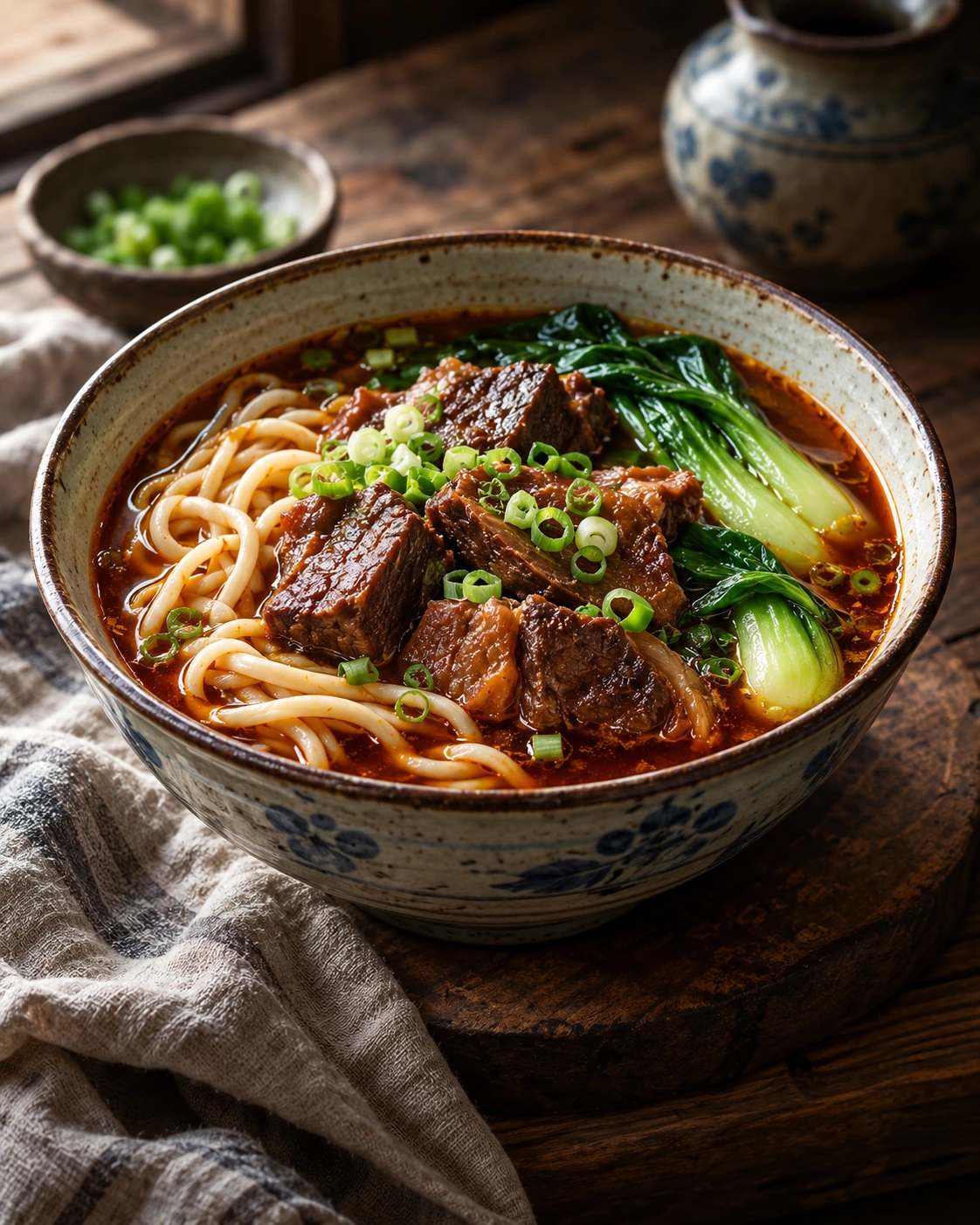
A deep bowl of Taiwanese red-braised beef noodle soup with chunky tender beef shin, wheat noodles, pak choi and sliced spring onion in reddish brown broth, no egg.

Make ahead

Preparation checkpoint: Cut beef into similar-sized pieces and check whether your doubanjiang is salted heavily before final seasoning. Make the cooked base ahead, cool promptly and chill; finish the final assembly just before serving.

Storage and reheating

Refrigerate perishable leftovers promptly in shallow covered containers at 5°C or below and use within 48 hours or the shortest ingredient use-by date. Reheat one portion once until steaming hot throughout, stirring sauces and soups for even heating. For chilled desserts, serve chilled rather than reheating.