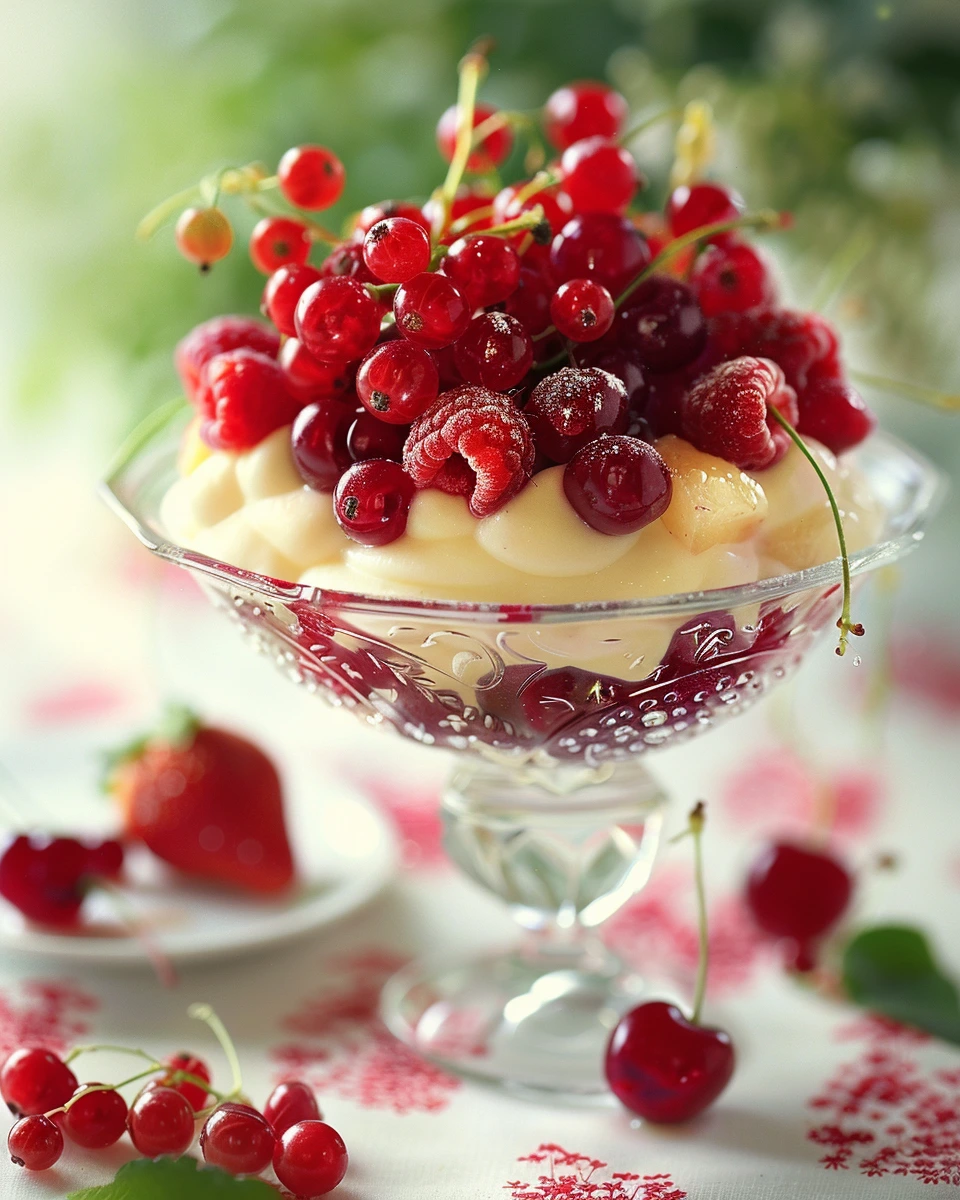
Rote Grütze: the story on the plate
The dish originated in northern Germany and Denmark, where earlier grain-based grützen evolved into fruit puddings as berries and starch became more available. Its name preserves the older porridge connection. It is valued for intense fruit flavour and a texture loose enough to spoon, not a rigid jelly. A pale vanilla sauce creates the classic colour and flavour contrast. Rote Grütze is a summer household dessert and a standard of northern German restaurants, often made when currants, raspberries and cherries are abundant.
Historical background
The dish originated in northern Germany and Denmark, where earlier grain-based grützen evolved into fruit puddings as berries and starch became more available. Its name preserves the older porridge connection.
Why it is famous
It is valued for intense fruit flavour and a texture loose enough to spoon, not a rigid jelly. A pale vanilla sauce creates the classic colour and flavour contrast.
Cultural significance
Rote Grütze is a summer household dessert and a standard of northern German restaurants, often made when currants, raspberries and cherries are abundant.