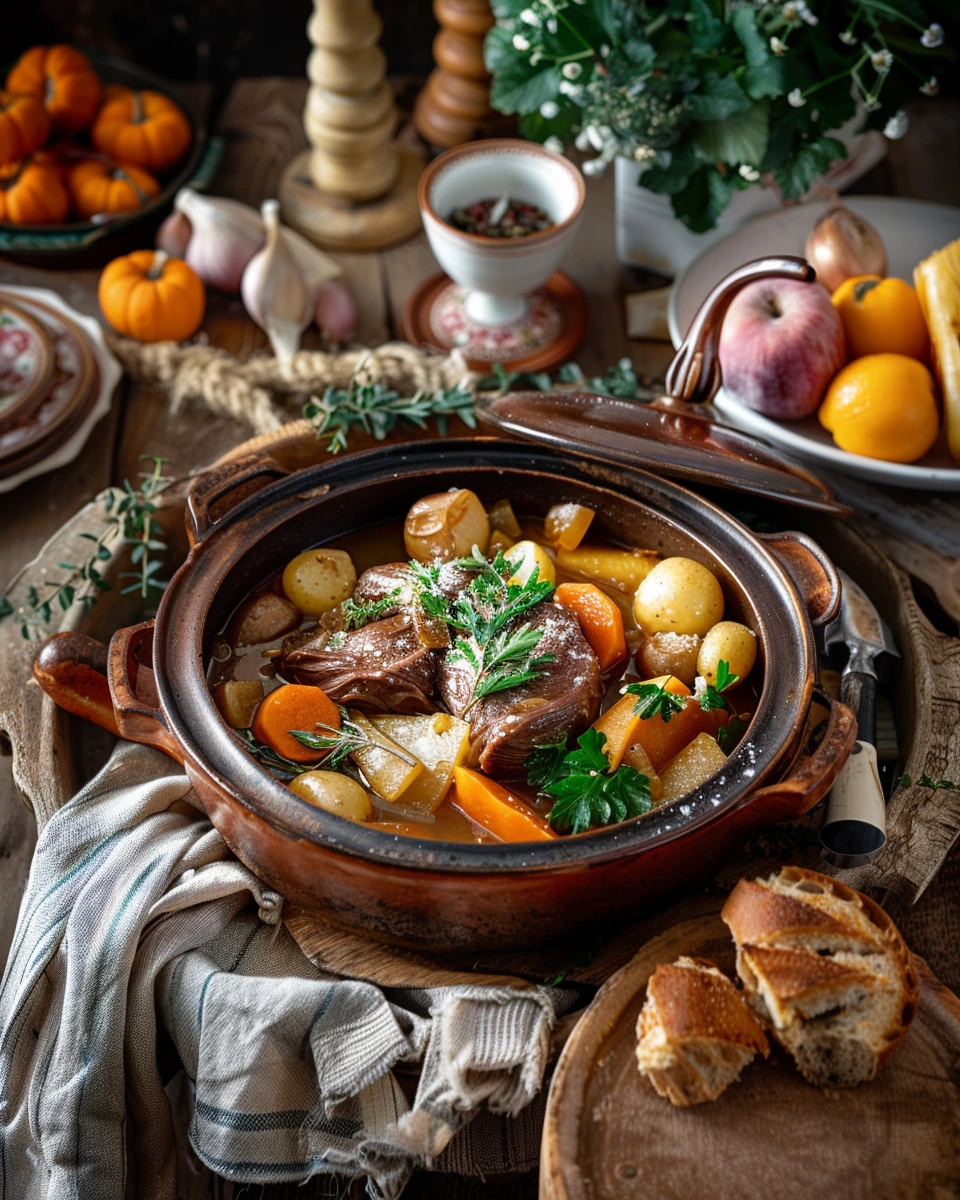
Pot-au-Feu: the story on the plate
Pot-au-feu is one of France's foundational household dishes. Tough beef cuts, bones and winter vegetables are simmered for hours, producing a clear broth followed by tender meat and vegetables that can be served in separate courses. It is famous for economy and completeness: one pot creates soup, meat, vegetables and useful leftovers. The flavour is clean and deeply savoury, depending more on patient extraction than browning or heavy seasoning. Often described as an emblem of French home cooking, pot-au-feu brings people around a shared pot and turns inexpensive ingredients into a Sunday meal. Condiments such as mustard, cornichons and coarse salt let each diner adjust the plate.
Historical background
Pot-au-feu is one of France's foundational household dishes. Tough beef cuts, bones and winter vegetables are simmered for hours, producing a clear broth followed by tender meat and vegetables that can be served in separate courses.
Why it is famous
It is famous for economy and completeness: one pot creates soup, meat, vegetables and useful leftovers. The flavour is clean and deeply savoury, depending more on patient extraction than browning or heavy seasoning.
Cultural significance
Often described as an emblem of French home cooking, pot-au-feu brings people around a shared pot and turns inexpensive ingredients into a Sunday meal. Condiments such as mustard, cornichons and coarse salt let each diner adjust the plate.