
American Main
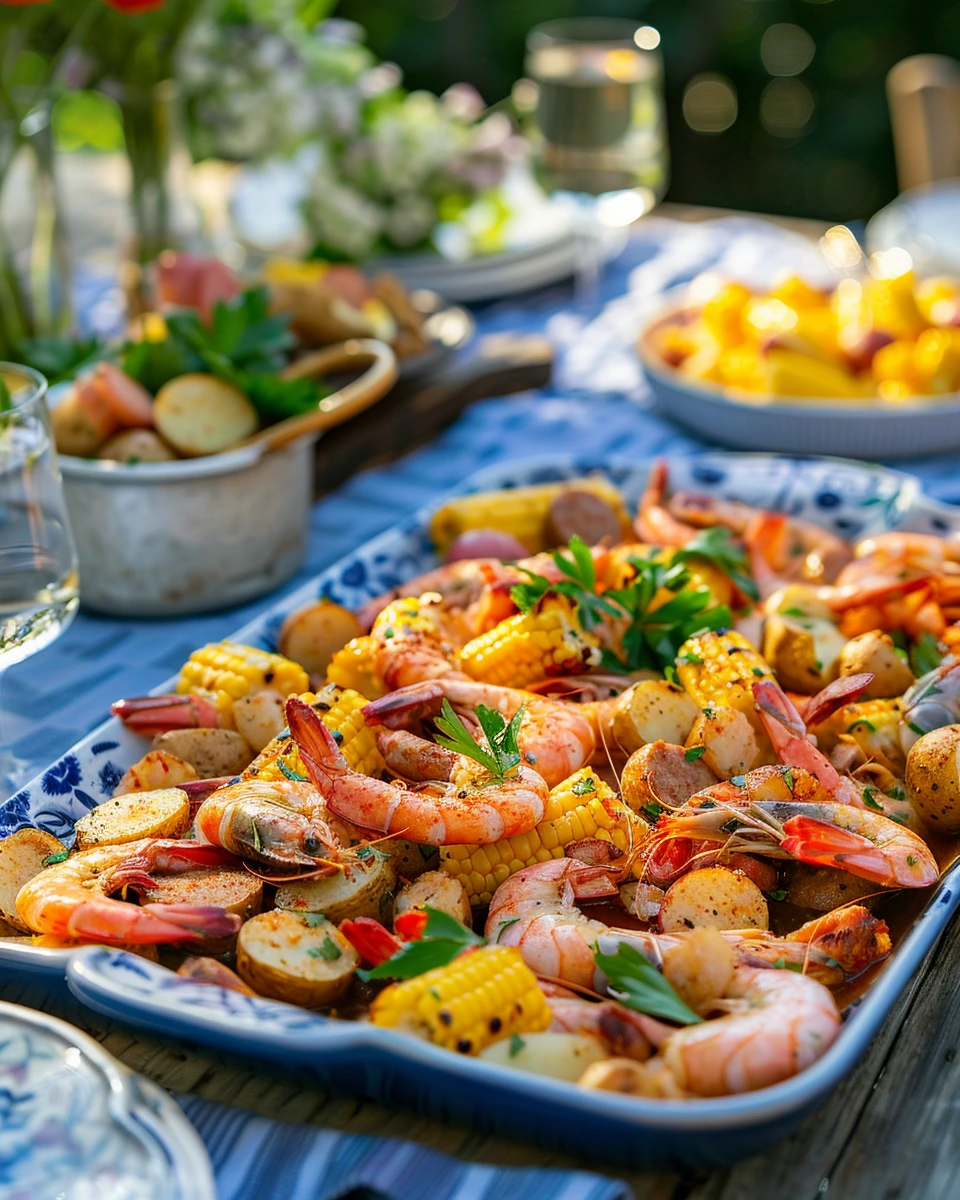
Lowcountry Frogmore Stew
Lowcountry Frogmore Stew upgraded with metric serves-2 ingredients, a clearer flavour profile and a stronger traditional food story.
20 minsPrep time
25 minsCook time
Serves 2Servings
EasyDifficulty
Nutrition
Estimated nutrition per serving
These figures are estimates per serving. Actual nutrition can vary with the brands and exact amounts you use, how much oil, dressing or sauce is absorbed, any substitutions or added extras, and the portion size served.A practical guide for comparing recipes and planning meals.
540Calories
36gProtein
42gCarbs
22gFat
Ingredients
What you need
- 600 small potatoes, halved if large
- 4 piece corn cobs, cut into thirds
- 350 smoked sausage, cut into 2 cm coins
- 700 raw prawns, shell-on if possible
- 3 Old Bay seasoning
- 2 piece lemon, halved
- 80 butter, melted, to serve
Method
Step-by-step method
Follow the recipe in order, tasting and adjusting seasoning where needed.
- 1. Bring a large pot of water to a rolling boil with Old Bay and halved lemons.
- 2. Add potatoes and cook for 10-12 minutes until just starting to soften.
- 3. Add corn pieces and sausage coins and boil for 5-7 minutes.
- 4. Add prawns and cook 2-3 minutes until pink, then drain and serve with melted butter.
Cook smarter
Tips, storage and serving advice
Shopping tips
Ingredient quality
Common mistakes
Chef’s tips
How to know it is cooked
Plating advice
Make ahead
Storage and reheating
Wine pairing
What to drink with Lowcountry Frogmore Stew
These are wine-style pairings, so you can choose any bottle in that style rather than needing one exact producer. Look for the grape, region or style name on the label.Pairings are chosen around the dish’s flavour, texture, richness, acidity and cooking style, not just the country it comes from.

#1
Excellent match
White
Albariño / Vinho Verde
Why it works:
- Flavour bridge: citrus, saline and mineral notes echo the maritime character of the dish
- Acidity: High acidity sharpens seafood and balances butter or oil
- Body: Light-to-medium body respects delicate texture
- Tannin: Very low tannin avoids metallic clashes with seafood
- Sweetness: Dry profile keeps the finish savoury
- Best for: Dinner, entertaining or recipe pairing

#2
Great match
White
Chablis / Unoaked Chardonnay
Why it works:
- Flavour bridge: citrus, saline and mineral notes echo the maritime character of the dish
- Acidity: High acidity sharpens seafood and balances butter or oil
- Body: Light-to-medium body respects delicate texture
- Tannin: Very low tannin avoids metallic clashes with seafood
- Sweetness: Dry profile keeps the finish savoury
- Best for: Dinner, entertaining or recipe pairing

#3
Interesting match
White
Assyrtiko
Why it works:
- Flavour bridge: citrus, saline and mineral notes echo the maritime character of the dish
- Acidity: High acidity sharpens seafood and balances butter or oil
- Body: Light-to-medium body respects delicate texture
- Tannin: Very low tannin avoids metallic clashes with seafood
- Sweetness: Dry profile keeps the finish savoury
- Best for: Dinner, entertaining or recipe pairing
Bottle suggestions
Specific wines to try
These are named bottles or regional wine examples already linked to this recipe. Each card opens the relevant wine-style guide because individual bottle pages are not currently published.American Zinfandel
Suggested pairing for Lowcountry Frogmore Stew: American Zinfandel supports the dish structure and dominant flavours.
Explore this wine styleAustralian Dry Riesling
Australian Dry Riesling is credible here because it represents the matched Dry Riesling style. Dry Riesling combines piercin…
Explore this wine styleAustralian Semillon Sauvignon Blanc
Australian Semillon Sauvignon Blanc is credible here because it represents the matched Sauvignon Blanc style. Sauvignon Blan…
Explore this wine styleAustralian Shiraz
Australian Shiraz is credible here because it represents the matched Syrah / Shiraz style. Syrah offers pepper, dark fruit a…
Explore this wine styleChinese Food Off-Dry Riesling
Chinese Food Off-Dry Riesling is credible here because it represents the matched Dry Riesling style. Dry Riesling combines p…
Explore this wine styleMexican Food Riesling
Mexican Food Riesling is credible here because it represents the matched Dry Riesling style. Dry Riesling combines piercing…
Explore this wine styleCook next
View cuisine More American recipes
Keep exploring the country’s food story through related starters, mains and desserts.

Maine Lobster Roll
Sweet Maine lobster lightly dressed and packed into a buttered, toasted split-top roll.

Green Chile Cheeseburger
A juicy beef burger topped with roasted New Mexico green chiles and melted cheese.

Philly Cheesesteak
Thinly sliced griddled beef in a long roll with melted cheese and, optionally, fried onions.

Southern Catfish Fry
Cornmeal-crusted catfish fried crisp and served with hush puppies, slaw, lemon and tartar sauce.