American Main

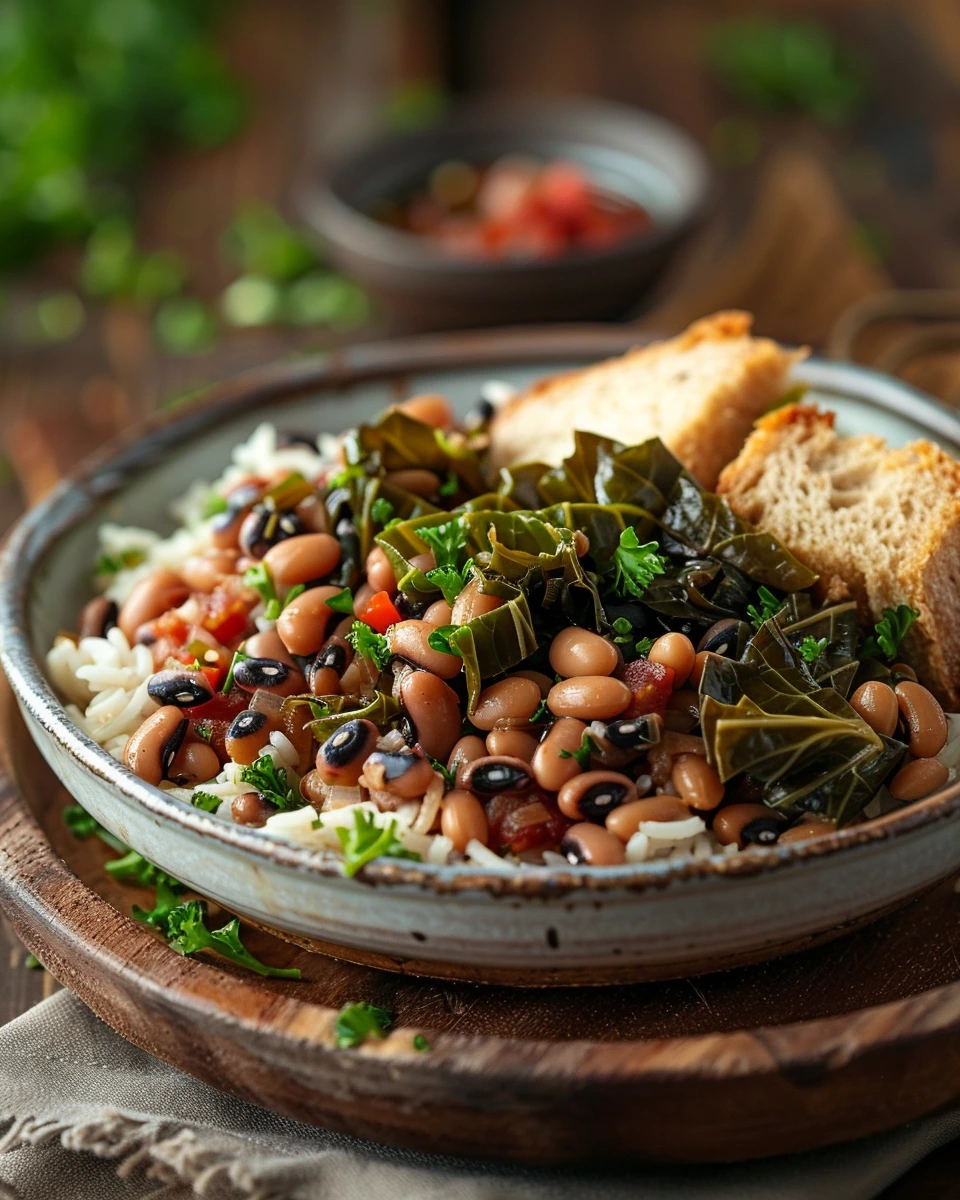
Hoppin John with Collard Greens

Hoppin John with Collard Greens upgraded with metric serves-2 ingredients, a clearer flavour profile and a stronger traditional food story.

20 minsPrep time
1 hr 15 minsCook time
Serves 2Servings
EasyDifficulty
Hoppin John with Collard Greens
About this dish

Hoppin John with Collard Greens: the story on the plate

A Southern New Year dish and everyday comfort plate, earthy, smoky and deeply satisfying.

Historical background

Hoppin John with Collard Greens reflects American regional food: immigrant influence, farming traditions, coastal seafood, barbecue, diners, bakeries and home desserts.

Why it is famous

It is famous because American cooking is deeply regional, from New England seafood and Southern comfort food to Midwest pies, barbecue and city-specific classics.

Cultural significance

Hoppin John with Collard Greens is useful on the site because it explains not just how to cook the dish, but why the ingredients and technique matter in American food culture.

Nutrition

Estimated nutrition per serving

Useful for meal planning and calorie-aware recipe browsing.

680Calories
42gProtein
52gCarbs
32gFat

Estimated from the upgraded serves-2 metric ingredient list; verify with a calculator before making health claims.

Ingredients

What you need

  • 160 onion, diced
  • 100 celery, diced
  • 120 green bell pepper, diced
  • 1 apple cider vinegar
  • 300 collard greens, stems removed, leaves sliced into ribbons
  • 300 black-eyed peas, black eyed peas, soaked overnight
  • 260 long-grain rice, long grain rice, rinsed
  • 450 smoked ham hock
  • 900 chicken stock
Method

Step-by-step method

Follow the recipe in order, tasting and adjusting seasoning where needed.

  1. 1. Dice onion, celery and green pepper evenly. Cook with a little oil over medium heat for 8 minutes until soft.
  2. 2. Add soaked black eyed peas, ham hock and stock. Simmer for 60-75 minutes until the peas are tender.
  3. 3. Stir in rinsed rice, cover and cook very gently for 18 minutes, then rest off heat for 10 minutes.
  4. 4. Slice collards into ribbons and cook until tender with a splash of vinegar. Serve beside or folded through.
Cook smarter

Tips, storage and serving advice

Shopping tips

Buy the ingredient that carries the dish first: fresh seafood, properly marbled meat, good maize products, fresh herbs, aromatic spices or ripe fruit depending on the recipe.

Ingredient quality

Choose whole spices, fresh citrus, clean seafood, good dairy and authentic staple ingredients where possible; stale spices and weak sauces make traditional recipes taste flat.

Common mistakes

For Hoppin John with Collard Greens, the main mistakes are losing control of the balance between black-eyed peas, long-grain rice, smoked ham hock, onion; rushing the "Soften the trinity" stage before the flavour or texture has properly developed; and using heat or cooking time mechanically instead of watching the food itself. Use the recipe's visual cue as your guide: The vegetables should soften without browning hard. With Hoppin John with Collard Greens, taste and observe as you cook rather than relying on the clock alone; the goal is a result that still tastes recognisably American and preserves the texture that makes this recipe distinctive.

Chef’s tips

For the best Hoppin John with Collard Greens, organise black-eyed peas, long-grain rice, smoked ham hock, onion before you start so the cooking itself can stay controlled. Give particular attention to the "Soften the trinity" stage: this is where the recipe begins to establish its final flavour and texture. A useful technique note from the method is: This Southern base is about savoury depth rather than colour. Trust the visual cue — The vegetables should soften without browning hard. — more than an exact minute count. At the "Finish greens" stage, make the final seasoning adjustment and serve without unnecessary delay. That final check is what makes Hoppin John with Collard Greens taste deliberate rather than simply cooked.

How to know it is cooked

Proteins should be cooked through but not dry; sauces should taste balanced; pastries, fried foods or baked desserts should be properly set and golden where appropriate.

Plating advice

Plate Hoppin John with Collard Greens so the dish reads clearly at first glance. Build the plate around the principal serving rather than scattering everything evenly; keep black-eyed peas, long-grain rice, smoked ham hock visually connected so the diner can understand the dish before taking the first bite. The presentation should protect the intended texture — comforting and bold: crisp, creamy, saucy, tender or flaky depending on the dish — so avoid covering crisp elements with sauce too early or compressing delicate components. For the finish, draw selectively from the existing garnish guidance: Use citrus, fresh herbs, chilli, spring onion, toasted nuts, seeds, crema, cheese or pickles where traditional for the cuisine. Use one or two elements with purpose rather than applying every option at once. For Hoppin John with Collard Greens, the final plate should feel consistent with its American identity: confident, appetising and easy to eat, with no decoration that competes with the food itself.

Make ahead

Sauces, fillings, marinades and braises can usually be made ahead; fried, grilled and crisp elements are best finished just before serving.

Storage and reheating

Store covered in the fridge. Eat seafood within 2 days and meat, vegetable dishes or desserts within 3 days unless recipe testing says otherwise. Reheat gently until piping hot. Use an oven or air fryer for crisp foods; use low heat for sauces, stews and braises.

Wine pairing

What to drink with Hoppin John with Collard Greens

Pairings are chosen around the dish’s flavour, texture, richness, acidity and cooking style — not just the country it comes from.

Dry Riesling wine pairing
#1 Excellent match White

Dry Riesling

Why it works: Dry Riesling balances Hoppin John with Collard Greens with freshness and fruit: enough acidity to cut through richness, but with a supple structure that does not overwhelm the meat.

A precise, high-acid white with lime, green apple, blossom and mineral tension. It loves pork, fish, cabbage, spice and rich sauces.

GrapeRiesling
RegionMosel, Rheingau, Alsace, Clare Valley
Wine flavourlime, green apple, petrol, slate, blossom
Serve at8-10°C
  • Flavour bridge: red or orchard fruit complements the meat's natural sweetness and browned edges
  • Acidity: Fresh acidity cleanses the palate after fat
  • Body: Medium body matches the dish without dominating it
  • Tannin: Moderate or low tannin keeps the pairing supple
  • Sweetness: Dry to gently off-dry styles can handle sweet-savoury elements
  • Best for: Dinner, entertaining or recipe pairing
Spätburgunder wine pairing
#2 Great match Red

Spätburgunder

Why it works: Spätburgunder balances Hoppin John with Collard Greens with freshness and fruit: enough acidity to cut through richness, but with a supple structure that does not overwhelm the meat.

German Pinot Noir with red cherry, earth and gentle spice. Excellent with pork, sausages, roast poultry, mushroom sauces and sauerbraten.

GrapeSpätburgunder / Pinot Noir
RegionBaden, Ahr, Pfalz
Wine flavourred cherry, raspberry, earth, clove
Serve at14-16°C
  • Flavour bridge: red or orchard fruit complements the meat's natural sweetness and browned edges
  • Acidity: Fresh acidity cleanses the palate after fat
  • Body: Medium body matches the dish without dominating it
  • Tannin: Moderate or low tannin keeps the pairing supple
  • Sweetness: Dry to gently off-dry styles can handle sweet-savoury elements
  • Best for: Dinner, entertaining or recipe pairing
Beaujolais / Gamay wine pairing
#3 Interesting match Red

Beaujolais / Gamay

Why it works: For a more adventurous pairing, beaujolais / Gamay balances Hoppin John with Collard Greens with freshness and fruit: enough acidity to cut through richness, but with a supple structure that does not overwhelm the meat.

Juicy light red with cherry, raspberry and low tannin. Excellent slightly chilled with charcuterie, poultry, pâté, sausages and rustic dishes.

GrapeGamay
RegionBeaujolais, Loire, Switzerland
Wine flavourcherry, raspberry, violet, pepper
Serve at12-14°C
  • Flavour bridge: red or orchard fruit complements the meat's natural sweetness and browned edges
  • Acidity: Fresh acidity cleanses the palate after fat
  • Body: Medium body matches the dish without dominating it
  • Tannin: Moderate or low tannin keeps the pairing supple
  • Sweetness: Dry to gently off-dry styles can handle sweet-savoury elements
  • Best for: Dinner, entertaining or recipe pairing

These are wine-style pairings, so you can choose any bottle in that style rather than needing one exact producer. Look for the grape, region or style name on the label.

Bottle suggestions

Specific wines to try

These are individual wines already linked to this recipe.