Pepian de Pollo: the story on the plate
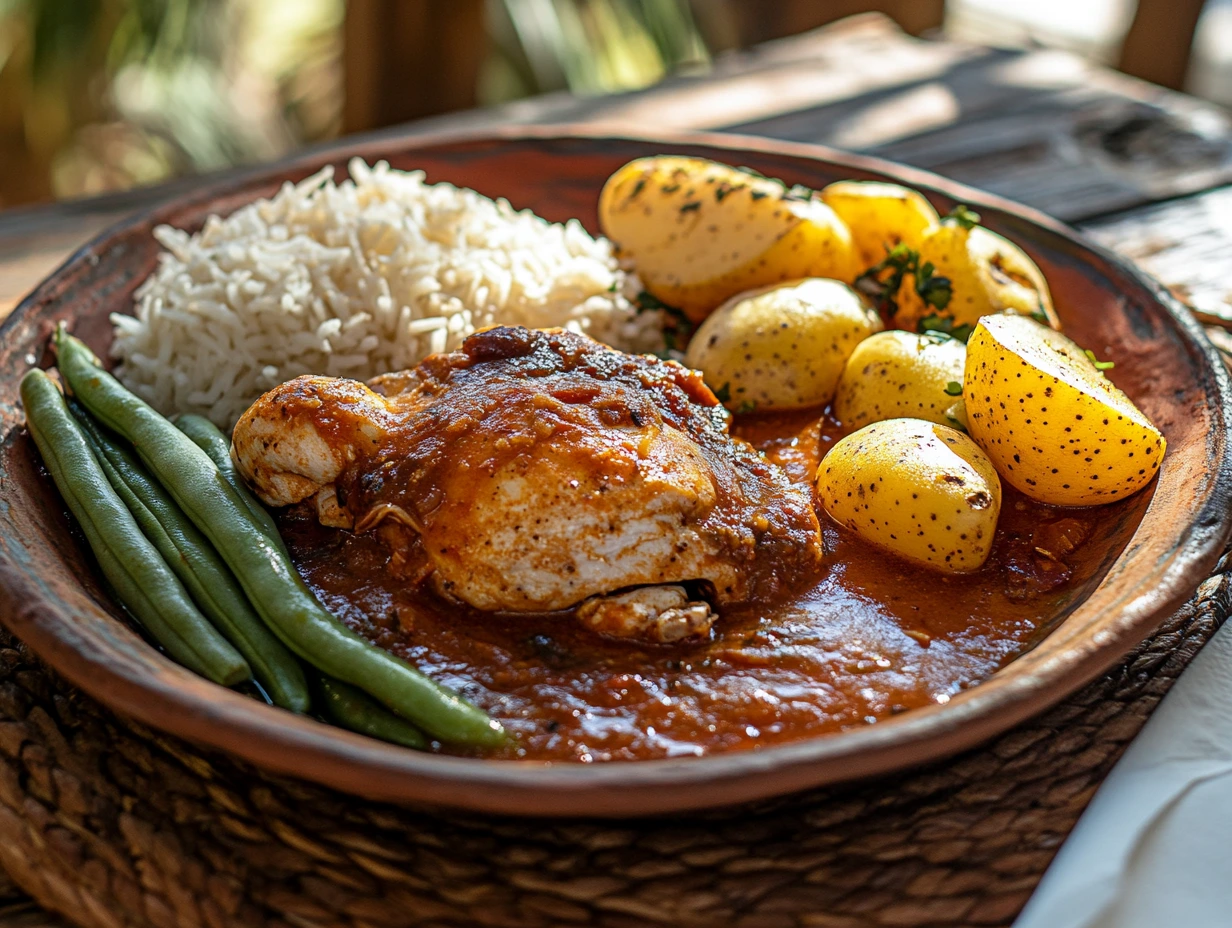
Pepian de Pollo is rooted in the highlands and Indigenous Maya cooking traditions. Its established form reflects local ingredients and the practical techniques used to prepare it for the table. The dish is known for toasted seeds, dried chillies, tomatoes and a dark, nutty recado. It succeeds when it is prepared with careful control of seasoning and texture, allowing the defining flavours and textures to remain clear. Pepian de Pollo is particularly associated with family meals and ceremonial occasions. That setting is central to understanding the dish: it explains when it is eaten, what accompanies it and why it continues to matter within Guatemalan food culture.
Historical background
Pepian de Pollo is rooted in the highlands and Indigenous Maya cooking traditions. Its established form reflects local ingredients and the practical techniques used to prepare it for the table.
Why it is famous
The dish is known for toasted seeds, dried chillies, tomatoes and a dark, nutty recado. It succeeds when it is prepared with careful control of seasoning and texture, allowing the defining flavours and textures to remain clear.
Cultural significance
Pepian de Pollo is particularly associated with family meals and ceremonial occasions. That setting is central to understanding the dish: it explains when it is eaten, what accompanies it and why it continues to matter within Guatemalan food culture.