Flammkuchen: the story on the plate
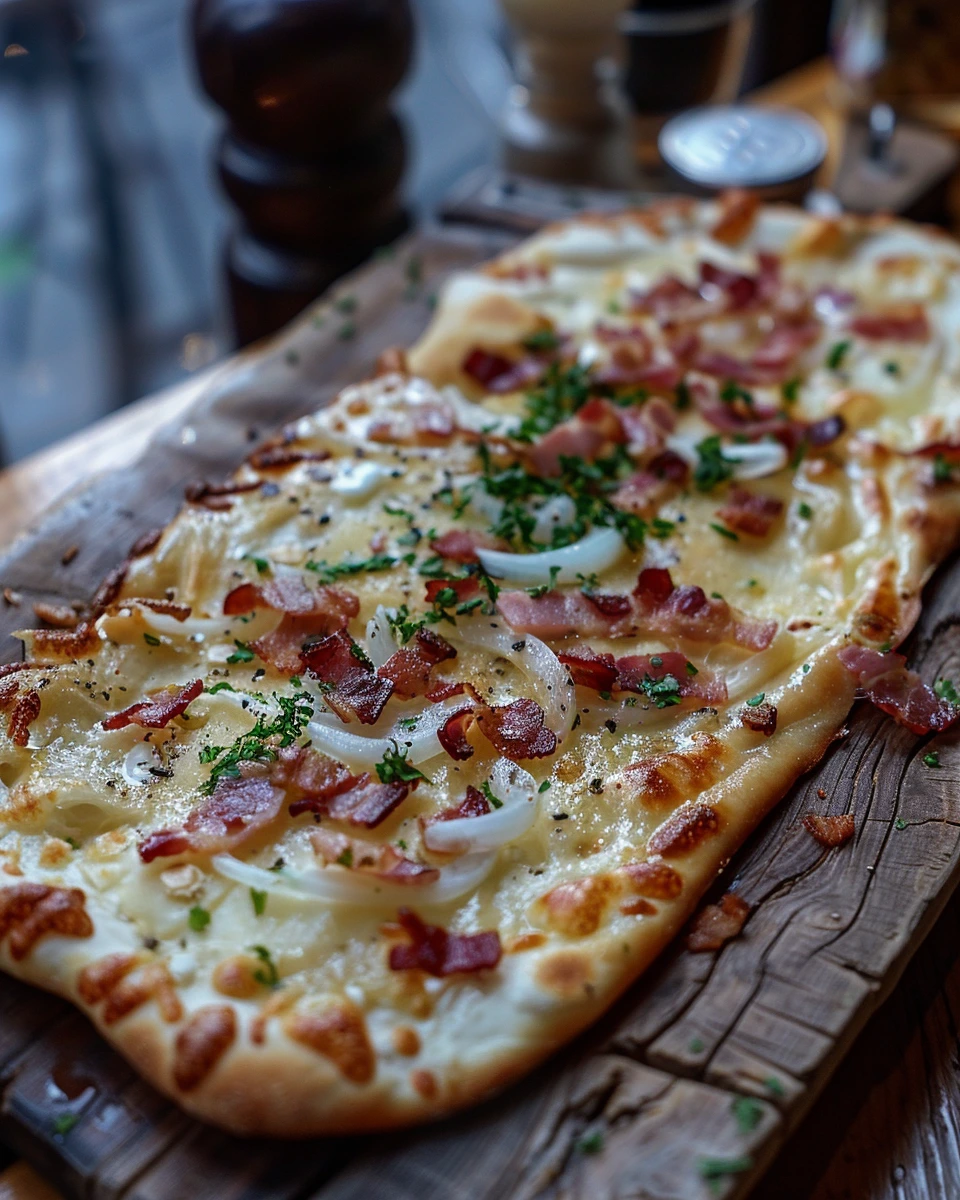
Flammkuchen began in the border region of Alsace, Baden and the Palatinate as bakers used a thin piece of dough to test the heat of wood-fired ovens. The quick-baking topped dough became a dish in its own right. Its base is thinner and crisper than pizza, with no heavy layer of cheese. Crème fraîche, onions and bacon cook rapidly into a smoky, tangy topping. It is eaten in wine taverns, autumn festivals and casual restaurants across the Rhine borderlands, often shared at the table with new wine or beer.
Historical background
Flammkuchen began in the border region of Alsace, Baden and the Palatinate as bakers used a thin piece of dough to test the heat of wood-fired ovens. The quick-baking topped dough became a dish in its own right.
Why it is famous
Its base is thinner and crisper than pizza, with no heavy layer of cheese. Crème fraîche, onions and bacon cook rapidly into a smoky, tangy topping.
Cultural significance
It is eaten in wine taverns, autumn festivals and casual restaurants across the Rhine borderlands, often shared at the table with new wine or beer.