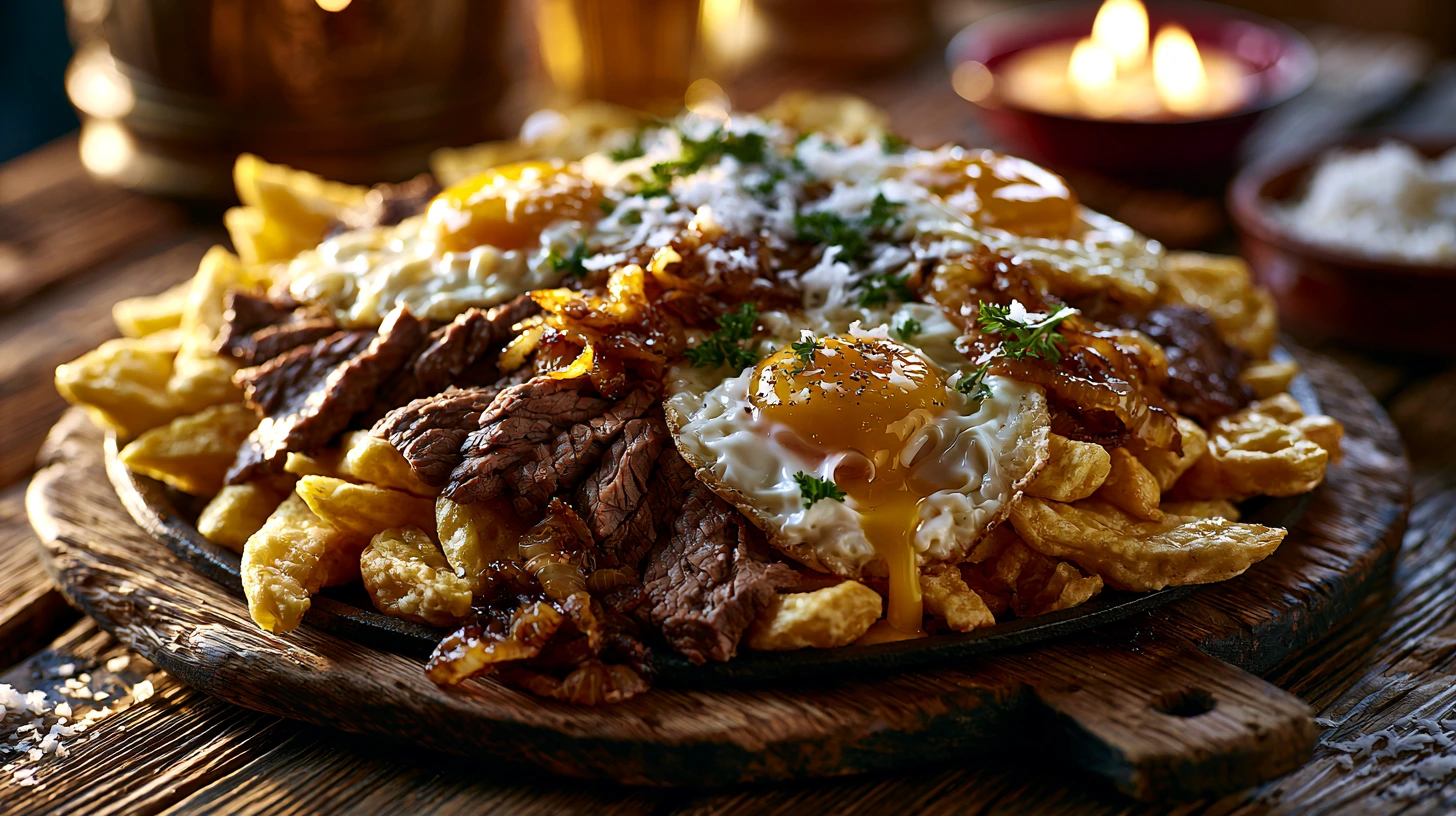
Chorrillana: the story on the plate
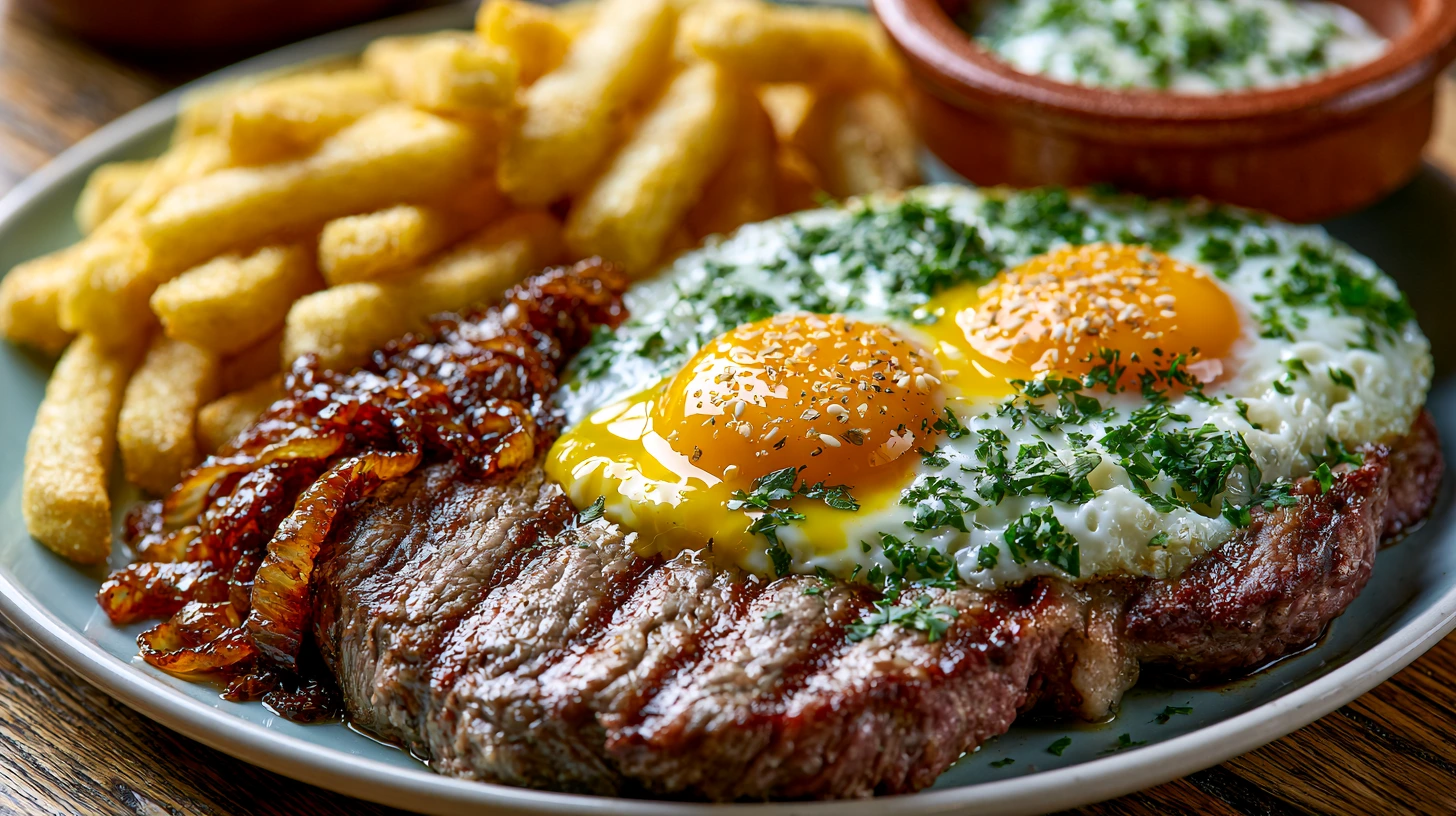
Chorrillana carries the imprint of migration, trade and regional habit while remaining recognisable as a practical dish. It reflects Chile’s long north-to-south geography, where Pacific seafood, Central Valley produce, Indigenous crops and European influences meet in domestic cooking. Its reputation rests on chips piled with beef, onions and fried eggs for a generous shared plate. The dish is immediately recognisable when the key ingredient and finishing texture are handled correctly. Chorrillana connects the plate to a wider social setting, whether informal, festive or regional. It is served in homes, picadas, markets, coastal restaurants or at national and family celebrations.
Historical background
Chorrillana carries the imprint of migration, trade and regional habit while remaining recognisable as a practical dish. It reflects Chile’s long north-to-south geography, where Pacific seafood, Central Valley produce, Indigenous crops and European influences meet in domestic cooking.
Why it is famous
Its reputation rests on chips piled with beef, onions and fried eggs for a generous shared plate. The dish is immediately recognisable when the key ingredient and finishing texture are handled correctly.
Cultural significance
Chorrillana connects the plate to a wider social setting, whether informal, festive or regional. It is served in homes, picadas, markets, coastal restaurants or at national and family celebrations.