Bakso: the story on the plate
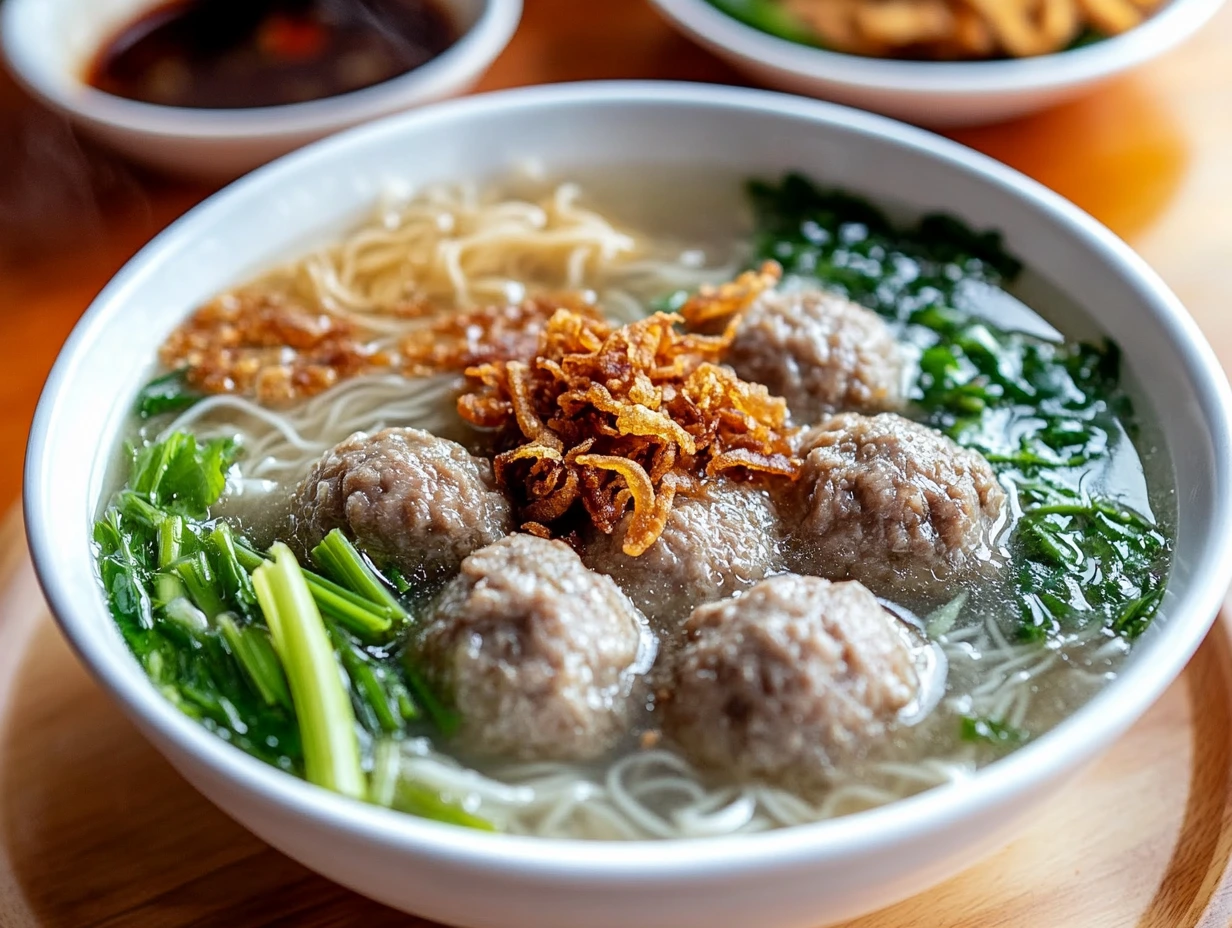
The history of Bakso is closely tied to urban street-food culture across Indonesia. The recipe developed as a recognisable local preparation rather than a generic example of Indonesian cooking. Its individual character comes from springy meatballs, clear broth, noodles and sambal. Good versions are balanced, accurately seasoned and cooked so the grain or noodle keeps its proper texture. Bakso is particularly associated with quick lunches and evening snacks. That setting is central to understanding the dish: it explains when it is eaten, what accompanies it and why it continues to matter within Indonesian food culture.
Historical background
The history of Bakso is closely tied to urban street-food culture across Indonesia. The recipe developed as a recognisable local preparation rather than a generic example of Indonesian cooking.
Why it is famous
Its individual character comes from springy meatballs, clear broth, noodles and sambal. Good versions are balanced, accurately seasoned and cooked so the grain or noodle keeps its proper texture.
Cultural significance
Bakso is particularly associated with quick lunches and evening snacks. That setting is central to understanding the dish: it explains when it is eaten, what accompanies it and why it continues to matter within Indonesian food culture.