Sharp food tastes good because it wakes up the plate. Vinegar, pickles, lemon, brines, fermented sauces and tart fruit all do the same important job: they stop food becoming dull.
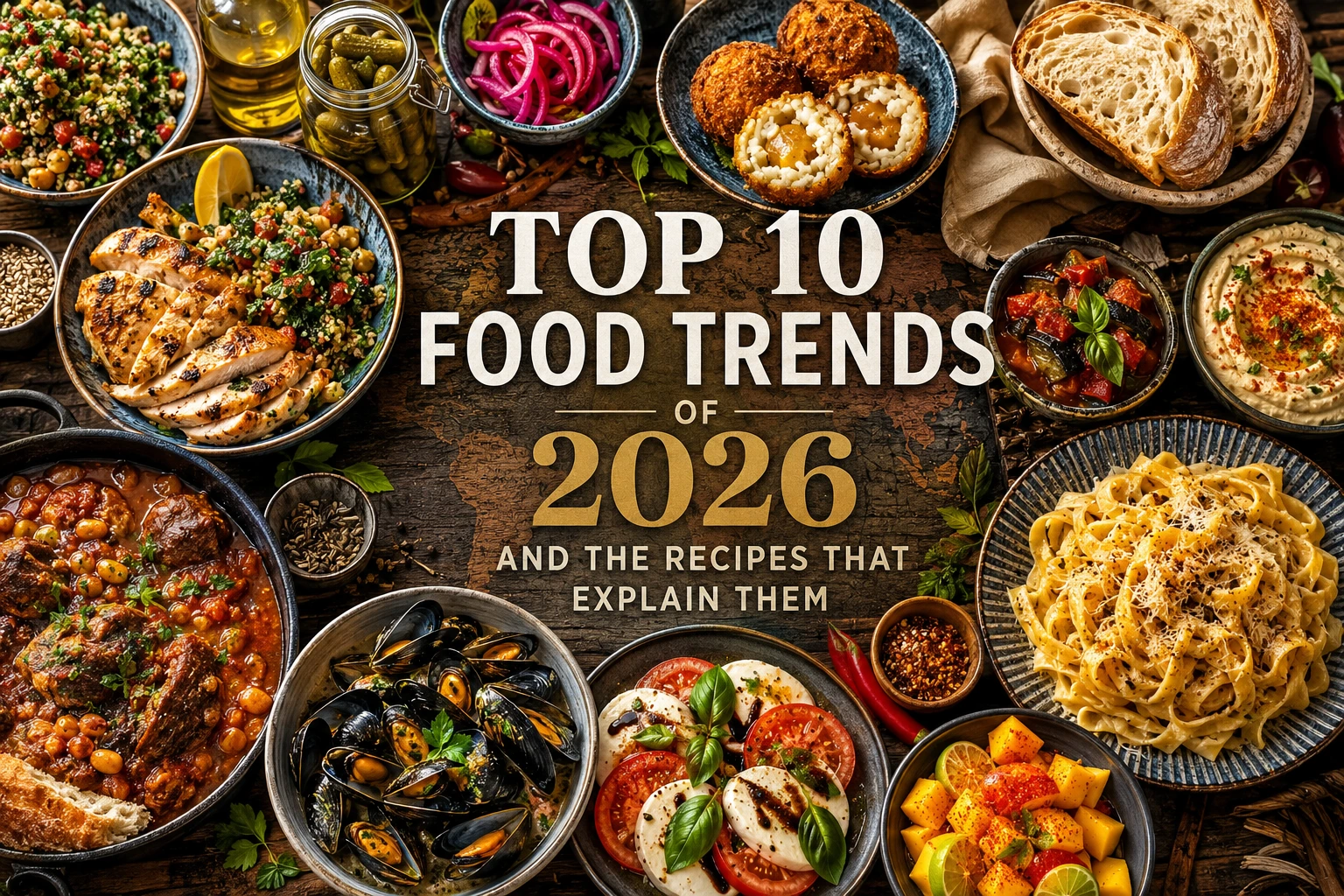
This article is part of our 2026 food trends series. Start with the full guide: Top 10 Food Trends of 2026 and the Recipes That Explain Them.
Why acidity is having a moment
In 2026, people are looking for food that feels bold without simply being heavier. Acidity gives flavour impact without relying only on more butter, sugar, salt or cream. A spoonful of vinegar can make tomatoes taste sweeter. Lemon can lift fish. Pickles can cut through fried food. A sharp dressing can turn vegetables into the most memorable part of the plate.
The trend also fits the wider interest in fermentation, gut health and global condiments. Kimchi, pickled onions, mango amba, chamoy, sauerkraut, preserved lemons and chilli vinegar all show how different cultures use sharpness to make food last longer and taste better.
Italy uses acidity to make freshness sing
Italian freshness is not bland freshness. It is built on ripe ingredients and the bright edges that make them taste fuller. Panzanella needs vinegar because bread, tomatoes and oil need a sharp line running through them. Without acidity, it becomes soft. With acidity, it becomes alive.
Bruschetta often relies on tomato's natural acidity, garlic's heat and olive oil's roundness. Caprese Salad works because ripe tomatoes bring sweetness and sharpness against cool mozzarella and fragrant basil. The freshness is not decoration. It is chemistry on a plate.
France shows how acid balances richness
French cooking understands richness, but it also understands how to control it. Sole Meunière is a butter dish, but lemon is what makes the butter feel elegant rather than heavy. Moules Marinières uses white wine and aromatics to give seafood a clean, lifted flavour.
Poulet Basquaise uses peppers and tomatoes to brighten chicken. Ratatouille benefits from the natural acidity of tomatoes, which stops slow-cooked vegetables becoming flat. These dishes show why sharpness is not a side note. It is part of balance.
Sharpness is also global, spicy and colourful
The rise of spicy fruit is part of the same story. Mango with chilli, pineapple hot sauce, watermelon with lime and chilli, tamarind, chamoy and Tajín all combine sweetness, heat, salt and acid. The result is immediate and highly memorable.
Moroccan food has its own sharp tradition through preserved lemons, olives, tomato salads and pickled vegetables. Taktouka is bright because peppers and tomatoes are supported by spice, garlic and olive oil. East African coastal cooking often uses lime, coconut and chilli to bring freshness to fish, rice and fried snacks.
A collection of recipes that prove sharp flavour matters
- Panzanella for vinegar, tomato and bread working together.
- Bruschetta for tomato acidity, garlic and olive oil.
- Caprese Salad for ripe tomatoes against creamy mozzarella.
- Moules Marinières for white wine and seafood brightness.
- Sole Meunière for lemon balancing butter.
- Poulet Basquaise for peppers and tomatoes lifting chicken.
- Ratatouille for vegetables kept lively by tomato.
- Taktouka for smoky pepper, tomato and spice.
Interesting facts behind the sharp flavour trend
- Acidity makes food taste more complete. It can sharpen sweetness, reduce heaviness and make salt feel more balanced.
- Pickling began as preservation. The flavour trend grew from practical food survival.
- Fermented and pickled foods often carry cultural identity. Think kimchi, sauerkraut, preserved lemons and chilli vinegar.
- Sharp flavour is especially useful with fried food. It cuts through fat and makes the next bite appealing.
- Fruit and chilli work because sweetness and heat amplify each other. Acid then keeps the combination fresh.
What to cook first
Cook Panzanella to understand vinegar's role in freshness, Sole Meunière to understand lemon with butter and Moules Marinières to understand wine with seafood. Sharp food is trending because it makes everything else taste more awake.