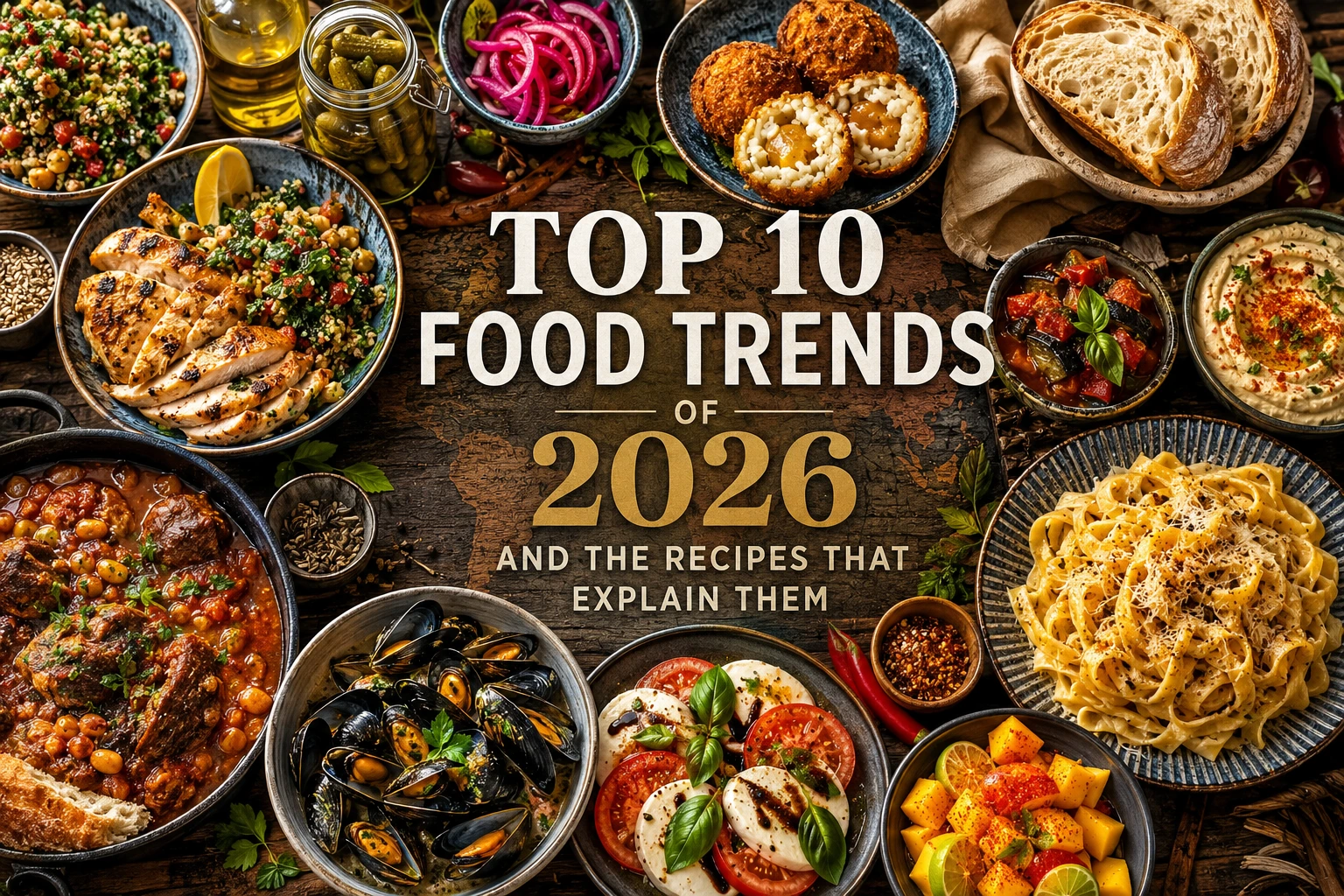
Small plates are one of the clearest eating shifts of 2026. They suit lighter appetites, tighter budgets, social dinners and the simple pleasure of trying more than one thing at the table.
This article is part of our 2026 food trends series. Start with the full guide: Top 10 Food Trends of 2026 and the Recipes That Explain Them.
Why small plates feel right now
The rise of small plates is not only about portion control. It is about flexibility. A smaller dish lets someone eat according to appetite, budget and mood. It also changes the energy of dinner. Instead of one plate arriving and defining the meal, the table becomes a conversation: something crisp, something fresh, something creamy, something warm, something sharp.
This matters in 2026 because people are more conscious of waste, price and heaviness. Some diners want nutrient-dense meals with protein and fibre. Some are affected by GLP-1 medication and prefer smaller amounts. Others simply prefer grazing, sharing and building a meal that feels more like discovery than routine.
Italy shows how small plates can still feel abundant
Italian food is one of the best examples because freshness and simplicity make smaller dishes feel complete. Bruschetta is only bread, tomato, garlic, basil and olive oil, but the freshness comes from the way those ingredients meet. The tomato brings juice and acidity. The garlic brings bite. The basil brings scent. The bread gives crunch and chew. Olive oil ties it together.
Caprese Salad feels fresh for the same reason. It is not complicated, but it is exact. Tomato, mozzarella, basil and olive oil depend on ripeness, temperature and balance. Panzanella goes further by making bread part of the salad, so the dish feels light and filling at the same time.
Small plates need contrast
A good small-plates table should never feel like a set of tiny portions. It should feel like a deliberate spread. That means contrast matters. Pair fresh salads with fried bites. Put creamy dishes beside pickles or lemon. Serve bread with something scoopable. Add herbs so the plate does not feel flat.
Arancini di Riso and Suppli al Telefono bring the fried, crisp, molten side of the table. Pâté de Campagne brings richness and old-fashioned depth. Escargots de Bourgogne brings garlic butter and the feeling of a French starter that turns a small serving into an occasion.
Small plates also work across Africa and the Middle East
The small-plate idea is not new. Moroccan salads, Turkish mezze, Egyptian beans, East African fried snacks and South African sharing food all understand that a meal can be built from several smaller dishes. Taktouka is a brilliant example because smoky peppers and tomatoes can be scooped with bread, served beside meat or used to brighten a larger spread.
Mandazi and Vitumbua show a sweeter, street-food version of the same idea. They are small enough to share, but memorable enough to shape the mood of the meal.
A collection of small plates that build a better table
- Bruschetta for tomato, basil and garlic freshness.
- Caprese Salad for a clean, cool plate built on ripe ingredients.
- Panzanella for a bread salad that feels generous.
- Arancini di Riso for crisp rice balls with comfort inside.
- Suppli al Telefono for Roman fried rice and melting cheese.
- Pâté de Campagne for rustic French richness.
- Taktouka for smoky pepper and tomato freshness.
- Mandazi for a sweet East African snack.
Interesting facts behind the small-plates trend
- Small plates help diners control cost. They let people order selectively without losing the sense of eating out.
- They fit changing appetites. Lighter meals and shareable dishes suit diners who do not always want a large main.
- They encourage exploration. A table of smaller dishes lets someone try a new cuisine with less risk.
- They are naturally visual. Colour, variety and texture make small plates ideal for food websites and social sharing.
- They reduce the pressure on one dish. The meal succeeds through the spread rather than a single centrepiece.
What to cook first
Build a table with Bruschetta, Arancini di Riso, Taktouka and Panzanella. Add bread, olives, herbs and something sharp. The point is not to shrink dinner. It is to make dinner more alive.