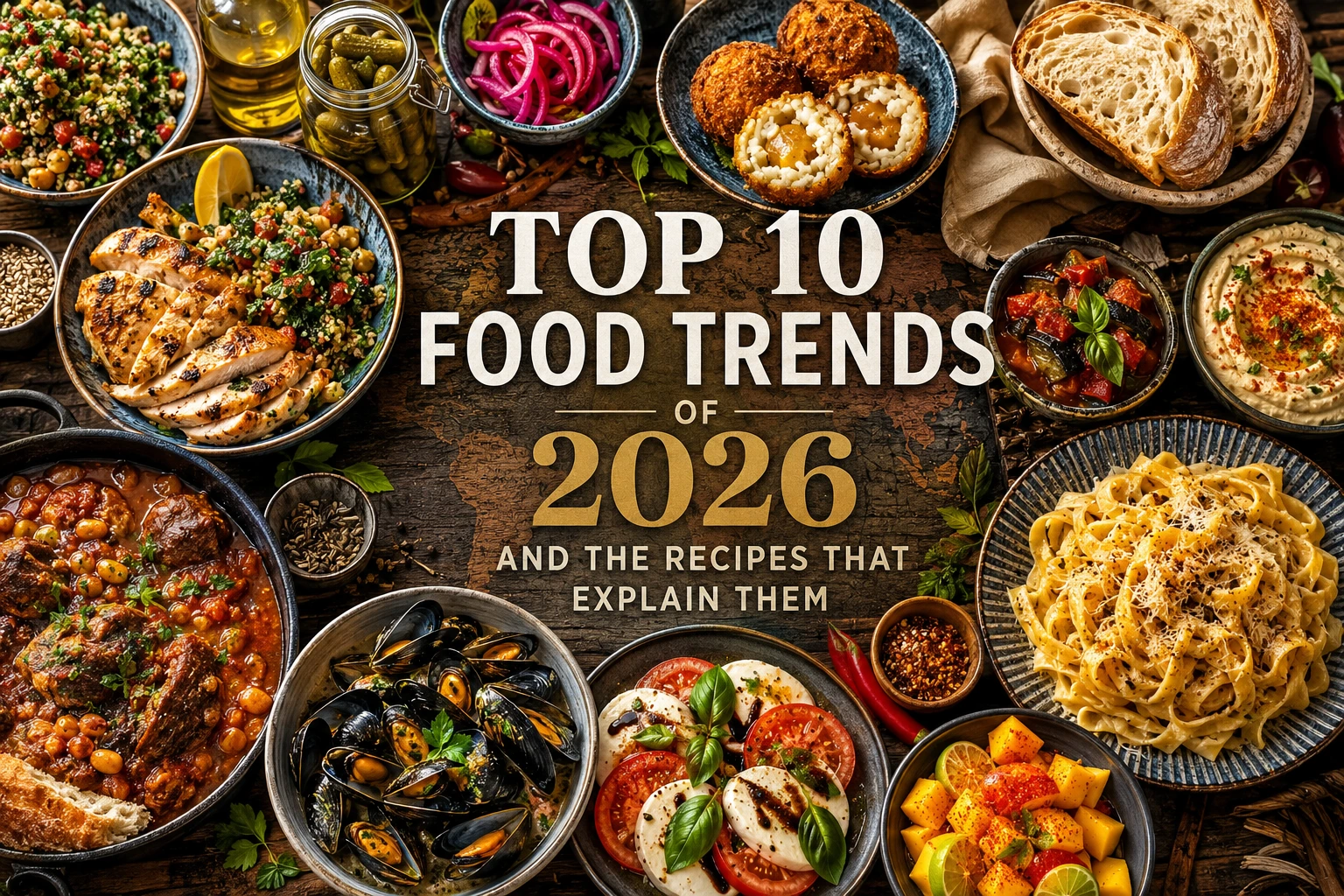
High-protein food is everywhere in 2026, but the best version of the trend is not a shake, a bar or a packet with a claim on the front. It is a proper meal that keeps you full, gives the plate a centre and still tastes like something someone would want to sit down for.
This article is part of our 2026 food trends series. Start with the full guide: Top 10 Food Trends of 2026 and the Recipes That Explain Them.
Why protein became the shorthand for a satisfying meal
Protein has become a simple promise. It tells people a dish should be filling, useful and more substantial than a snack pretending to be dinner. That matters in 2026 because eating habits are changing. Some people are training more seriously. Some are eating smaller meals. Some are trying to manage appetite around GLP-1 weight-loss medication. Others simply want a plate that feels worth the money.
The trend feels modern because the word protein is now everywhere, but the idea is ancient. Cooks have always known that meat, fish, eggs, beans, pulses, yoghurt, cheese and lentils give a meal backbone. A bowl of rice is comforting, but rice with chicken, beans or fish becomes dinner. Bread is beautiful on its own, but bread with pâté, cheese, mussels, stew or beans becomes a table.
Argentina shows the emotional side of protein
Argentina is the obvious country to mention because beef is woven into its food identity. Asado is not just grilled meat. It is time, smoke, family, patience and the theatre of feeding people around fire. The lesson is useful for 2026: protein is not only about grams. It is about the feeling of a meal being anchored.
That same idea appears in many places. French bistros turn beef and duck into slow pleasure. American cooking uses grills, wings, pies and hearty breakfasts. Italian cooking often makes protein feel lighter by surrounding it with tomato, herbs, cheese, beans and grains. Indian food proves protein does not have to mean meat, because lentils, chickpeas, paneer and yoghurt carry huge amounts of comfort and depth.
French classics explain why protein needs patience
Steak Frites is the direct version of the trend: beef, potatoes and a plate that makes sense before anyone explains it. But Boeuf Bourguignon tells the deeper story. Tougher beef becomes luxurious because wine, heat and time do the work. It is protein turned into comfort by technique.
Coq au Vin does the same with chicken, giving a familiar meat more character through wine, mushrooms and slow cooking. Cassoulet is perhaps the most useful recipe for understanding the trend because it combines meat and beans. It is rich, but also practical. It stretches protein, builds fibre and turns a pot into a meal that can feed a table.
Seafood belongs in the same conversation. Moules Marinières gives protein without heaviness, using wine, shallots and herbs to keep the dish lively. Sole Meunière proves that protein can be delicate, fast and elegant rather than large and heavy.
Protein does not have to mean a steak on every plate
The most interesting high-protein meals often combine sources. Beans with meat. Fish with bread. Cheese with grains. Lentils with rice. Chicken with yoghurt. Eggs with vegetables. This is where traditional food feels more intelligent than modern marketing. It rarely isolates protein. It builds meals around it.
Indian food is a perfect example. Dal Makhani uses lentils and beans to create richness without needing a large piece of meat. Chole Bhature turns chickpeas into a central event. Goan Fish Curry brings seafood, coconut and spice together so the protein is part of a larger story.
Moroccan food does something similar with lamb, chicken, chickpeas, lentils and eggs. Harira is meaningful because it combines pulses, herbs, tomato and spice into a soup that feels restorative. It is exactly the kind of dish that makes a health trend feel human.
A collection of recipes that make protein feel exciting
- Steak Frites gives the trend its classic bistro shape: beef, potatoes and sauce.
- Boeuf Bourguignon shows how slow cooking turns beef into a dish with history and depth.
- Coq au Vin makes chicken feel special through wine, mushrooms and patience.
- Cassoulet brings meat and beans together in a deeply satisfying pot.
- Moules Marinières offers a lighter seafood-led route into protein.
- Dal Makhani shows how lentils and beans can feel as comforting as meat.
- Goan Fish Curry carries protein through coconut, spice and coastal flavour.
- Harira makes pulses, tomato and herbs feel nourishing rather than worthy.
Interesting facts behind the protein trend
- Protein has become a menu signal. Diners use it as a quick way to judge whether a dish will be filling enough.
- GLP-1 influenced eating has pushed restaurants to think differently. Smaller appetites make nutrient-dense dishes more important.
- Beans and lentils are part of the protein story. They also bring fibre, which makes them especially relevant in 2026.
- Seafood is protein without heaviness. Mussels, white fish and coastal curries suit diners who want satisfaction without a huge plate.
- Traditional cuisines rarely separate nutrition from pleasure. They build protein into stews, soups, grills, breads, rice dishes and shared meals.
What to cook first
Choose Steak Frites if you want the trend in its simplest form. Choose Cassoulet if you want the most complete version, with meat, beans, comfort and value in one pot. Choose Moules Marinières if you want protein to feel fresh, coastal and light. The trend is everywhere because it answers a simple question: will this meal actually satisfy me?