African food is too often described as if it were one thing. It is not. It is a continent of spice routes, coastal markets, cattle cultures, grains, pulses, breads, stews, sweets, grills, fasting food, celebration food and street snacks.
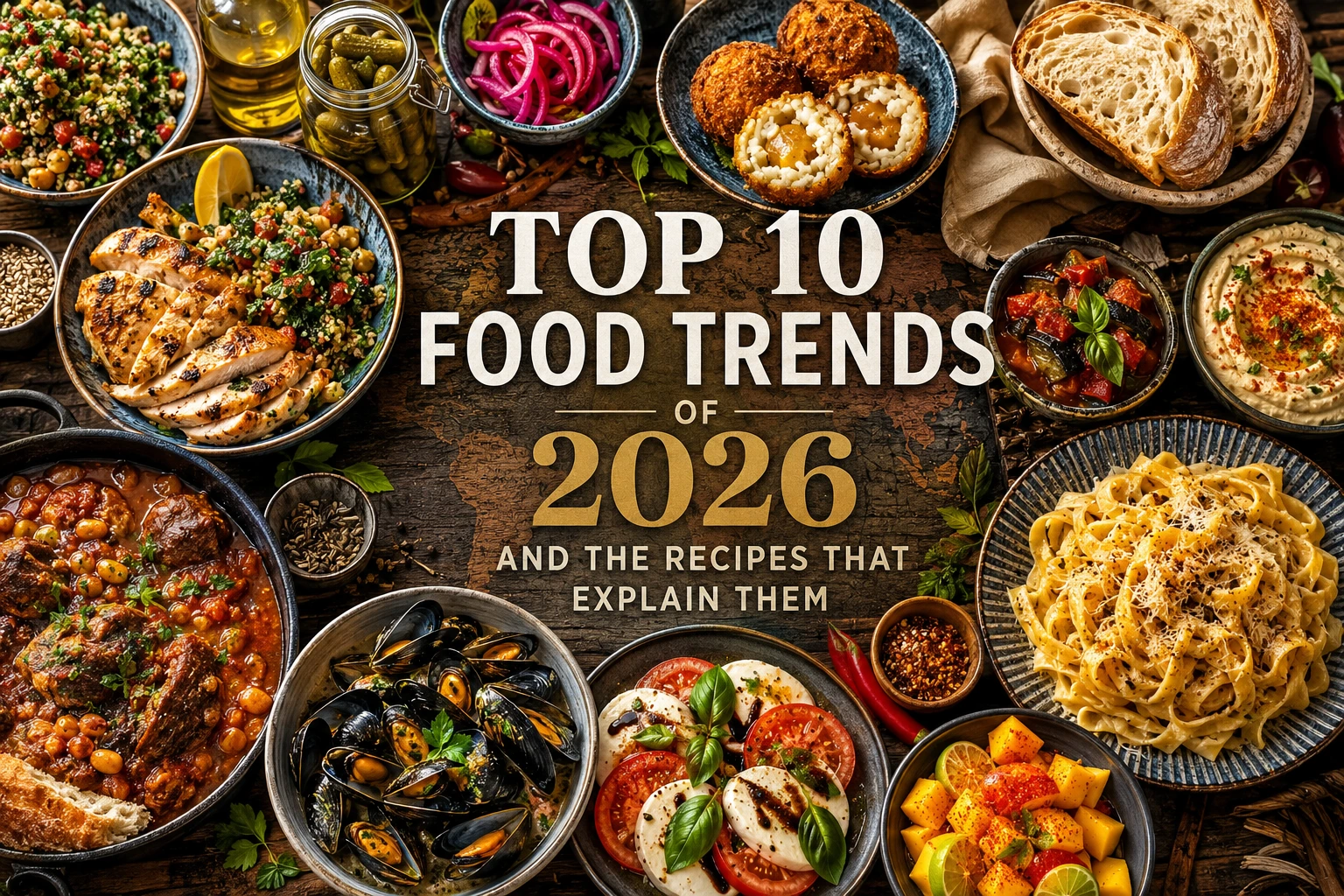
This article is part of our 2026 food trends series. Start with the full guide: Top 10 Food Trends of 2026 and the Recipes That Explain Them.
Why African food deserves more space in 2026
One of the most important food shifts is the search for new stories beyond the same familiar set of cuisines. African food offers exactly that, but only if it is treated with care and specificity. Tanzania is not Morocco. Egypt is not South Africa. Kenya is not Senegal. Each place has its own ingredients, histories and rhythms of eating.
The continent also speaks directly to 2026 food trends. It has high-protein grilled meats and fish, fibre-rich beans and grains, sharp relishes, fermented foods, value-led family dishes, street snacks, spice-led comfort and brilliant small plates. The trends may sound new, but many African cuisines have been cooking this way for generations.
Tanzania and the Indian Ocean story
Tanzanian food shows how geography shapes flavour. Mainland cooking leans on maize, beans, plantains, cassava, greens, meat and fish. Coastal and Zanzibari cooking brings rice, coconut, seafood and warm spices through Indian Ocean trade. Arab, Indian and local East African influences meet without becoming one flat thing.
Mandazi tells the street-food story: a fried dough that can be breakfast, snack or celebration. Vitumbua tells a softer coastal story through rice and coconut. Halua ya Zanzibar carries spice and sweetness, connecting Zanzibar to a long history of trade and celebration.
Morocco and the art of layered flavour
Moroccan cooking shows how spice can create warmth rather than simply heat. Harira is one of the most meaningful examples: tomato, lentils, chickpeas, herbs and spices in a soup closely associated with Ramadan and family tables. Taktouka is humbler but just as useful, turning peppers and tomatoes into something smoky, scoopable and bright.
This is the story of North African cooking at its best: preservation, spice, bread, pulses, herbs and dishes designed to gather people rather than impress from a distance.
Egypt, South Africa and Kenya show different kinds of everyday genius
Egyptian food is built around fava beans, bread, lentils, rice, herbs, garlic and lemon. Dishes such as ful medames and koshari show how pulses and grains can feed cities. They are value-led, filling and full of texture.
South African food carries another layered history: Indigenous foodways, braai culture, Cape Malay spice, Indian South African curries, maize staples and coastal seafood. Bobotie, bunny chow, chakalaka, boerewors and malva pudding all tell different parts of the national story.
Kenyan food brings nyama choma, ugali, sukuma wiki, beans, chapati and coastal dishes into the picture. It is a food culture where grilled meat, maize, greens and community eating all matter.
A collection of dishes that tell the story
- Mandazi for East African street-food comfort.
- Vitumbua for rice, coconut and coastal softness.
- Halua ya Zanzibar for spice, sweetness and trade.
- Kashata ya Nazi for coconut sweets and everyday pleasure.
- Kashata ya Karanga for peanut sweetness and texture.
- Mkate wa Ufuta for sesame bread and practical baking.
- Harira for Moroccan lentils, chickpeas, tomato and herbs.
- Taktouka for smoky pepper and tomato salad.
Interesting facts behind African food stories
- The Indian Ocean shaped East African food. Spices, rice, coconut and trade routes changed coastal cooking.
- Many African dishes are naturally fibre-rich. Beans, grains, pulses, vegetables and breads are central to everyday meals.
- Grilling is a social act. From nyama choma to braai, meat often carries the story of gathering.
- Street food is a major storytelling route. Fried snacks, breads and sweets show how people eat between work, travel and celebration.
- African food cannot be reduced to heat. It is also sour, smoky, sweet, herb-led, fermented, nutty, coastal and slow-cooked.
What to cook first
Start with Mandazi if you want an easy entry into East African street food. Try Harira if you want a nourishing North African bowl. Add Taktouka to understand how peppers, tomatoes and spice can brighten a table. African food matters in 2026 because it brings exactly what readers want: flavour, story, comfort, value and discovery.